
Search Phrase = format
Privacy Policy
Effective date: March 14, 2018, updated June 15th 2019
Anomaly Studios, LLC, also doing business as Anomaly Learning and the Coding Academy ("company", "us", "we", or "our") operates the https://anomalystudios.com, https://learn.anomalystudios.com, https://classes.anomalystudios.com UnityXD, Coding Academy websites and apps (the "Service").
This page informs you of our policies regarding the collection, use, and disclosure of personal data when you use our Service and the choices you have associated with that data.
We use your data to provide and improve the Service. By using the Service, you agree to the collection and use of information in accordance with this policy. Unless otherwise defined in this Privacy Policy, terms used in this Privacy Policy have the same meanings as in our Terms and Conditions, accessible from https://www.anomalystudios.com/terms-of-use-and-conditions
As stated in our Terms of Use, our website and Services are offered and available only to you, if you are (a) that You have not been previously suspended or removed from the Website by Anomaly Learning; (b) that You are either (i) at least 13 years of age or (ii) Your parent and/or guardian has consented to Your use of the Website; and (c) that your registration and your use of the Website is in compliance with any and all applicable laws and regulations.
We are obligated to ask for your explicit consent and give explicit terms of what users are giving consent to.
Personal Data or Personally Identifiable Information means data about a living individual who can be identified from those data (or from those and other information either in our possession or likely to come into our possession).
"processing" generally covers actions that can be performed in connection with data such as collection, use, storage and disclosure.
Usage Data is data collected automatically either generated by the use of the Service or from the Service infrastructure itself (for example, the duration of a page visit).
Cookies are small pieces of data stored on a User's device. Our website uses cookies to distinguish you from other users of our website. This helps us to provide you with a good experience when you browse our website and also allows us to improve our site. For example, by ensuring that users are finding what they are looking for easily.
Data Controller means the natural or legal person who (either alone or jointly or in common with other persons) determines the purposes for which and the manner in which any personal data are, or are to be, processed.
For the purpose of this Privacy Policy, we are a Data Controller of your data.
Data Processor (or Service Provider) means any natural or legal person (other than an employee of the Data Controller) who processes the data on behalf of the Data Controller.
We may use the services of various Service Providers in order to process your data more effectively.
Data Subject is any living individual who is using our Service and is the subject of Personal Data.
The User is the individual using our Service. The User corresponds to the Data Subject, who is the subject of Personal Data.
We collect several different types of information for various purposes to provide and improve our Service to you.
Our collection, use, and disclosure of Student Data are governed by our Privacy Policy and Terms of Use and also by the provision of the Family Educational Rights and Privacy Act (FERPA), the Children's Online Privacy Protection Act (COPPA), General Data Protection Regulation (GDPR), and applicable state laws that relate to the collection of Student Data.
Our cookies do not collect Personal Information or Children's Personal Information, and we do not combine the general information collected through these cookies with other Personal Information or Children's Personal Information to tell us who you are or what your user name or email address is.
If you come to our business through a sales affiliate, cookies are used to associate your account and information with the sales affiliate in order to calculate sales commissions.
While using our Service, we may ask you to provide us with certain personally identifiable information that can be used to contact or identify you ("Personal Data"). We only ask for Personally Identifiable Information where it is reasonably necessary to provide the Services. Personally identifiable information may include, but is not limited to:
â— Email address
â— First name and last name
â— Phone number
â— Address, State, Province, ZIP/Postal code, City
â— Credit Card Payment Information
â— Your Birthdate and Place of Birth
â— Workplace of School
â— A Photo
â— IP Address
â— Metadata
â— Education Records
â— Cookies and Usage Data
â— Posts on Social Media and more
We may use your Personal Data to contact you with newsletters, marketing or promotional materials and other information that may be of interest to you. You may opt out of receiving any, or all, of these communications from us by following the unsubscribe link or instructions provided in any email we send or by contacting us.
We may also collect information how the Service is accessed and used ("Usage Data"). This Usage Data may include information such as your computer's Internet Protocol address (e.g. IP address), browser type, browser version, the pages of our Service that you visit, the time and date of your visit, the time spent on those pages, unique device identifiers and other diagnostic data.
We may use and store information about your location if you give us permission to do so ("Location Data"). We use this data to provide features of our Service, to improve and customize our Service.
You can enable or disable location services when you use our Service at any time, through your device settings.
We use cookies and similar tracking technologies to track the activity on our Service and hold certain information.We may gather anonymous information about Users through cookie technology on an individual and aggregate level.
Cookies are files with small amount of data which may include an anonymous unique identifier. Cookies are sent to your browser from a website and stored on your device. Tracking technologies also used are beacons, tags, and scripts to collect and track information and to improve and analyze our Service.
Examples of Cookies we use:
â— Session Cookies. We use Session Cookies to operate our Service. which expire after a short time or when you close your browser, and persistent cookies, which remain stored in your browser for a set period of time. We use session cookies to identify you during a single browsing session, like when you log in
â— Preference Cookies. We use Preference Cookies to remember your preferences and various settings.
â— Security Cookies. We use Security Cookies for security purposes.
â— Advertising Cookies. Advertising Cookies are used to serve you with advertisements that may be relevant to you and your interests.
â— Analytics Cookies. enable us to monitor and analyze web traffic and can be used to keep track of user behavior.
â— Social Media Cookies. We use Social Media Cookies for various Social Media platforms like Facebook, Twitter, Youtube, Linkedin, and Instagram to allow interactions with their services.
â— Email marketing. We collect name and email address when you register for a webinar or event, request a free resource or join a waiting list, via Infusionsoft
Non-Personal Information
Web Beacons, also known as pixel tags and clear GIFs, ("Web Beacons"), are electronic images that allow a website to access cookies and help track marketing campaigns and general usage patterns of visitors to those websites. Web Beacons can recognize certain types of information, such as cookie numbers, time and date of a page view, and a description of the page where the Web Beacons are placed. No Personally Identifiable Information about you is shared with third parties through the use of Web Beacons on our website. However, through Web Beacons, we may collect general information that will not personally identify you, such as: Internet browser, operating system, date of visit, time of visit and path taken through the website.
When we collect usage information (such as the numbers and frequency of visitors to the Website), we only use this data in aggregate form, and not in a manner that would identify you personally. For example, this aggregate data tells us how often users use parts of the Services, so that we can make the Services appealing to as many users as possible. We may also provide this aggregate information to our partners; our partners may use such information to understand how often and in what ways people use our Services, so that they, too, can provide you with an optimal experience. We do not disclose aggregate information to a partner in a manner that would identify you personally.
â— Authentication and security. Cookies help authenticate your access to Anomaly Learning and prevent unauthorized parties from accessing your accounts.
â— Preferences. Cookies help us remember your settings on the pages you visit, so that we can display your preferred content the next time you visit, or preferred language or the country you're in, so we can provide content in your preferred language without asking each time you visit.
â— Analytics and research. Cookies help us test different versions of Anomaly Learning to see which features or content users prefer, web beacons help us determine which email messages are opened, and cookies help us see how you interact with Anomaly Learning, like the links you click on. We also work with a number of analytics partners, including Google Analytics, who use cookies and similar technologies to help us analyze how users use the Services.
â— Personalized content. Cookies help us provide more relevant content.
â— Advertising. To provide you with more relevant advertising. Note that advertising and targeting only happens through our marketing web pages. No marketing or advertising occurs within our platforms when you are logged into your account. We do this so that only advertising appears to parents and not to children. It is our practice and policy to never display advertising to children.
â— Improve Services. Cookies help us analyze user's experience with our services so that we may improve.
Some information is collected automatically by servers and the services that run the Internet. Additional Metadata is collected for data logs and for security to ensure our platform is a safe place for all. Automatic information collection is described below.
â— Device Information: including your IP address, browser types, browser language, operating system, platform type, gaming platform, device types, and device IDs such as unique identifiers, advertising identifiers, or gaming platform identifiers.
â— Usage Information: including files you download, domain names, landing pages, your browsing activity, what you click, scrolling and keystroke activity, pages viewed, advertising viewed or visited, forms or fields you complete or partially complete, search terms, whether you open an email and your interaction with the content, access times, and error logs, and other similar information.
â— Location Information: including the city, state and ZIP code associated with your IP address, information derived through WiFi triangulation, and precise location information from GPS-based functionality on your mobile devices or from your use of our Mobile Apps, and with your consent, your precise GPS information. (If you are using one of our native apps, and only if you explicitly turned GPS service on within the app, the precise location information from GPS-based functionality will be shared on from your mobile devices or from your use of our Mobile Apps. Your explicit consent is required within our apps for, your precise GPS information to be shared to our systems.)
â— Viewing Behavior: including the content you view, how long you watch each video, the quality of the service you receive (e.g. buffering, load times).
â— Offline Information. Certain information may also be stored while you are offline and transmitted to us when you next connect to the Internet, regardless of where you connect from or the device you use to connect.
Google Analytics
We use a tool called "Google Analytics" to collect information about the users of our services. Google Analytics collects information such as how often users visit our website site, what pages they visit when they do so, and what other sites they used prior to coming to our website. We use the information we get from Google Analytics to analyze performance so we can improve our services, including to help customize our website for users.
Most browsers are initially set up to accept cookies, but you can reset your browser to refuse all cookies or to indicate when a cookie is being sent. However, some features and services (particularly those that require you to sign-in) may not function properly if your cookies are disabled. You may also set your email options to prevent the automatic downloading of images that may contain technologies that would allow us to know whether you have accessed our email and perform certain functions with it.
Through browser preferences, it is also possible to delete Cookies installed in the past, including the Cookies that may have saved the initial consent for the installation of Cookies by our website.
Users can, for example, find information about how to manage Cookies in the most commonly used browsers at the following addresses: Google Chrome, Mozilla Firefox, Apple Safari and Microsoft Internet Explorer.
With regard to Cookies installed by third parties, Users can manage their preferences and withdrawal of their consent by clicking the related opt-out link (if provided), by using the means provided in the third party's privacy policy, or by contacting the third party.
Notwithstanding the above, the Owner informs that Users may follow the instructions provided on the subsequently linked initiatives by the EDAA (EU), the Network Advertising Initiative (US) and the Digital Advertising Alliance (US), DAAC (Canada), DDAI (Japan) or other similar services. Such initiatives allow Users to select their tracking preferences for most of the advertising tools.
Anomaly Studios, LLC uses the collected data for various purposes:
â— To provide and maintain our Service
â— To notify you about changes to our Service
â— To allow you to participate in interactive features of our Service when you choose to do so
â— To provide customer support
â— To gather analysis or valuable information so that we can improve our Service
â— To monitor the usage of our Service
â— To detect, prevent and address technical issues
â— To provide you with news, special offers and general information about other goods, services and events which we offer that are similar to those that you have already purchased or enquired about unless you have opted not to receive such information
â— To comply with applicable laws, regulations, court orders, government and law enforcement agencies' requests.
If you are from the European Economic Area (EEA), our legal basis for collecting and using the personal information described in this Privacy Policy depends on the Personal Data we collect and the specific context in which we collect it.
We may process your Personal Data because:
â— We need to perform a contract with you
â— You have given us permission to do so
â— The processing is in our legitimate interests and it is not overridden by your rights
â— For payment processing purposes
â— To comply with the law
Anomaly Studios, LLC will retain your Personal Data only for as long as is necessary for the purposes set out in this Privacy Policy and that the data is required to offer our services. We will retain and use your Personal Data to the extent necessary to comply with our legal obligations (for example, if we are required to retain your data to comply with applicable laws), resolve disputes, perform our services, and enforce our legal agreements and policies.
Anomaly Studios, LLC will also retain Usage Data for internal analysis purposes. Usage Data is generally retained for a shorter period of time, except when this data is used to strengthen the security or to improve the functionality of our Service, or we are legally obligated to retain this data for longer time periods.
You may exercise your right to request your personal information to be deleted by Anomaly Studios, LLC.
We will hold on to personal information only as long as is reasonably necessary for the purpose for which it was collected. We will securely dispose of it once you no longer have a legitimate reason for retaining it.l
Your information, including Personal Data, may be transferred to - and maintained on - computers located outside of your state, province, country or other governmental jurisdiction where the data protection laws may differ than those from your jurisdiction.
If you are located outside the United States and choose to provide information to us, please note that we transfer the data, including Personal Data, to United States and process it there.
Your consent to this Privacy Policy followed by your submission of such information represents your agreement to that transfer.
Anomaly Studios, LLC will take all steps reasonably necessary to ensure that your data is treated securely and in accordance with this Privacy Policy and no transfer of your Personal Data will take place to an organization or a country unless there are adequate controls in place including the security of your data and other personal information.
If you choose to use our Services from the European Union, please note the following information:
Anomaly Studios, LLC is based in the United States of America. Your personal information is therefore transferred outside the European Union ("EU") and European Economic Area ("EEA"). Such transfer is necessary for the performance of the contract between you Anomaly Studios, LLC
Your PII is also transferred to and processed by third party payment providers and your bank. Such transfers are necessary for performance of the contract between you and Anomaly Studios, LLC(article 49.1 (b) of the GDPR).
In order for us to provide the Services to you, your personal information will be transferred to, and stored at/processed in the United States. Your personal data may also be processed by staff operating outside the European Economic Area (EEA), such as in India and the Philippines, who work for us or for one of our suppliers. We will take all steps reasonably necessary to ensure that your personal data is treated securely and in accordance with this notice.
If you are a resident of the European Economic Area (EEA), you have certain data protection rights. Anomaly Studios, LLC aims to take reasonable steps to allow you to correct, amend, delete or limit the use of your Personal Data.
If you wish to be informed about what Personal Data we hold about you and if you want it to be removed from our systems, please contact us.
In certain circumstances, you have the following data protection rights:
â— The right to refuse to become a data subject
The right to be informed with anything that happens with your personal data and to know what it is used for
â— The right to refuse processing
â— Unless other contractual issues exist or if proprietary company rights exist (of which you should be informed of before you allow your data to be processed) then you can request a copy of your data.
â— The right to erasure
â— The right to access, update or delete the information we have on you. Whenever made possible, you can access, update or request deletion of your Personal Data directly within your account settings section. If you are unable to perform these actions yourself, please contact us to assist you.
â— The right of rectification. You have the right to have your information rectified if that information is inaccurate or incomplete.
â— The right to object. You have the right to object to our processing of your Personal Data.
â— The right of restriction. You have the right to request that we restrict the processing of your personal information.
â— The right to data portability. You have the right to be provided with a copy of the information we have on you in a structured, machine-readable and commonly used format.
â— The right to withdraw consent. You also have the right to withdraw your consent at any time where we relied on your consent to process your personal information.
Please note that we may ask you to verify your identity before responding to such requests.
You have the right to complain to a Data Protection Authority about our collection and use of your Personal Data. For more information, please contact your local data protection authority in the European Economic Area (EEA).
There are some kinds of information you should never provide without student permission including student names, numbers, citizenship, gender, ethnicity, religious and other preferences, grades, GPAs, and class schedules or any other identifiable information.
We may use data which has been de-identified and/or aggregated for product development, research, analytics and other purposes, including for the purpose of analyzing, improving, or marketing the Anomaly Studios, LLC Services. In certain occasions, Anomaly Studios, LLC may share this data with business partners to improve our services or offerings. If we disclose information to authorized business partners to conduct research on online education or assist in understanding the usage, viewing, and demographic patterns for certain programs, content, services, promotions, and/or functionality on our Service, such data will be aggregated and/or anonymized to reasonably avoid identification of a specific individual.
If Anomaly Studios, LLC is involved in a merger, acquisition or asset sale, your Personal Data may be transferred. We will provide notice before your Personal Data is transferred and becomes subject to a different Privacy Policy.
Under certain circumstances, Anomaly Studios, LLC may be required to disclose your Personal Data if required to do so by law or in response to valid requests by public authorities (e.g. a court or a government agency).
Anomaly Studios, LLC may disclose your Personal Data in the good faith belief that such action is necessary to:
â— To comply with a legal obligation
â— To protect and defend the rights or property of Anomaly Studios, LLC
â— To prevent or investigate possible wrongdoing in connection with the Service
â— To protect the personal safety of users of the Service or the public
â— To protect against legal liability
The security of your data is important to us, but remember that no method of transmission over the Internet, or method of electronic storage is 100% secure. While we strive to use commercially acceptable means to protect your Personal Data, we cannot guarantee its absolute security.
We do not support Do Not Track ("DNT"). Do Not Track is a preference you can set in your web browser to inform websites that you do not want to be tracked.
You can enable or disable Do Not Track by visiting the Preferences or Settings page of your web browser.
Anomaly Studios, LLC aims to take reasonable steps to allow you to correct, amend, delete, or limit the use of your Personal Data.
Whenever made possible, you can update your Personal Data directly within your account settings section. If you are unable to change your Personal Data, please contact us to make the required changes.
If you wish to be informed what Personal Data we hold about you and if you want it to be removed from our systems, please contact us.
Schools must annually notify parents of students and eligible students in attendance of their rights under FERPA.
In certain circumstances, you have the right:
â— To access and receive a copy of the Personal Data we hold about you
â— To rectify any Personal Data held about you that is inaccurate. If you believe that any PII we are holding is incorrect or incomplete please send an email with your specific request to support@anomalystudios.com
â— You have the right to request your personal information to not be processed
â— You have the right to give consent to disclosures
â— You have the right to file a complaint
â— To request the deletion of Personal Data held about you
You have the right to data portability for the information you provide to Anomaly Studios, LLC. You can request to obtain a copy of your Personal Data in a commonly used electronic format so that you can manage and move it.
Please note that we may ask you to verify your identity before responding to such requests.
We may employ third party companies and individuals to facilitate our Service ("Service Providers"), to provide the Service on our behalf, to perform Service-related services or to assist us in analyzing how our Service is used.
These third parties may have access to your Personal Data only to perform these tasks on our behalf and are obligated not to disclose or use it for any other purpose. Not all providers below will have your data as this is a full representation of 3rd party providers for all our customers servicing a variety of contracts for platforms and services. Only data that is needed for the delivery of the Service is shared with providers to administer the Service.
Amazon Web Services
â— Hostgator and Endurance International Group: Their privacy policy can be viewed at: https://www.endurance.com/privacy/privacy
â— Google Apps for Business
â— Google Cloud/Firebase
â— Teachable
â— TeamworkPM
â— TeamworkDesk
â— Infusionsoft
â— Zapier
â— ScheduleOnce
â— OneSignal
â— Copper
â— ClickFunnels
â— ShareThis
â— Inspectlet
â— QuickBooks and QuickBooks Payments
â— Tawk.to Live Support: Their privacy policy can be viewed at: https://www.tawk.to/privacy-policy/
â— Cloudflare: Their privacy policy can be viewed at https://www.cloudflare.com/privacypolicy/
We may use third-party Service Providers to monitor and analyze the use of our Service.
â— Google Analytics
â— Google Analytics is a web analytics service offered by Google that tracks and reports website traffic. Google uses the data collected to track and monitor the use of our Service. This data is shared with other Google services. Google may use the collected data to contextualize and personalize the ads of its own advertising network.
â— You can opt-out of having made your activity on the Service available to Google Analytics by installing the Google Analytics opt-out browser add-on. The add-on prevents the Google Analytics JavaScript (ga.js, analytics.js, and dc.js) from sharing information with Google Analytics about visits activity.
â— For more information on the privacy practices of Google, please visit the Google Privacy & Terms web page: http://www.google.com/intl/en/policies/privacy/
We may use third-party Service Providers to show advertisements to you to help support and maintain our Service.
â— Google AdSense & DoubleClick Cookie
â— Google, as a third party vendor, uses cookies to serve ads on our Service. Google's use of the DoubleClick cookie enables it and its partners to serve ads to our users based on their visit to our Service or other websites on the Internet.
â— You may opt out of the use of the DoubleClick Cookie for interest-based advertising by visiting the Google Ads Settings web page: http://www.google.com/ads/preferences/
Anomaly Studios, LLC uses remarketing services to advertise on third party websites to you after you visited our Service. We and our third-party vendors use cookies to inform, optimize and serve ads based on your past visits to our Service.
â— Google AdWords
â— Google AdWords remarketing service is provided by Google Inc.
â— You can opt-out of Google Analytics for Display Advertising and customize the Google Display Network ads by visiting the Google Ads Settings page: http://www.google.com/settings/ads
â— Google also recommends installing the Google Analytics Opt-out Browser Add-on - https://tools.google.com/dlpage/gaoptout - for your web browser. Google Analytics Opt-out Browser Add-on provides visitors with the ability to prevent their data from being collected and used by Google Analytics.
â— For more information on the privacy practices of Google, please visit the Google Privacy & Terms web page: http://www.google.com/intl/en/policies/privacy/
â— Twitter
â— Twitter remarketing service is provided by Twitter Inc.
â— You can opt-out from Twitter's interest-based ads by following their instructions: https://support.twitter.com/articles/20170405
â— You can learn more about the privacy practices and policies of Twitter by visiting their Privacy Policy page: https://twitter.com/privacy
â— Facebook and Instagram
â— Facebook remarketing service is provided by Facebook Inc.
â— You can learn more about interest-based advertising from Facebook by visiting this page: https://www.facebook.com/help/164968693837950
â— To opt-out from Facebook's interest-based ads follow these instructions from Facebook: https://www.facebook.com/help/568137493302217
â— Facebook adheres to the Self-Regulatory Principles for Online Behavioral Advertising established by the Digital Advertising Alliance. You can also opt-out from Facebook and other participating companies through the Digital Advertising Alliance in the USA http://www.aboutads.info/choices/, the Digital Advertising Alliance of Canada in Canada http://youradchoices.ca/ or the European Interactive Digital Advertising Alliance in Europe http://www.youronlinechoices.eu/, or opt-out using your mobile device settings.
â— For more information on the privacy practices of Facebook, please visit Facebook's Data Policy: https://www.facebook.com/privacy/explanation
â— Pinterest
â— Pinterest remarketing service is provided by Pinterest Inc.
â— You can opt-out from Pinterest's interest-based ads by enabling the "Do Not Track" functionality of your web browser or by following Pinterest instructions: http://help.pinterest.com/en/articles/personalization-and-data
â— You can learn more about the privacy practices and policies of Pinterest by visiting their Privacy Policy page: https://about.pinterest.com/en/privacy-policy
We may provide paid products and/or services within the Service. In that case, we use third-party services for payment processing (e.g. payment processors).
We will not store or collect your payment card details. That information is provided directly to our third-party payment processors whose use of your personal information is governed by their Privacy Policy. These payment processors adhere to the standards set by PCI-DSS as managed by the PCI Security Standards Council, which is a joint effort of brands like Visa, Mastercard, American Express and Discover. PCI-DSS requirements help ensure the secure handling of payment information.
The payment processors we work with are:
â— Apple Store In-App Payments
â—‹ Their Privacy Policy can be viewed at https://www.apple.com/legal/privacy/en-ww/
â— Google Play In-App Payments
â—‹ Their Privacy Policy can be viewed at https://www.google.com/policies/privacy/
â— Stripe
â—‹ Their Privacy Policy can be viewed at https://stripe.com/us/privacy
â— PayPal or Braintree
â—‹ Their Privacy Policy can be viewed at https://www.paypal.com/webapps/mpp/ua/privacy-full
â— Authorize.net
â—‹ Their Privacy Policy can be viewed at https://www.authorize.net/company/privacy/
â— Infusionsoft by Keap
â—‹ https://keap.com/legal/privacy-policy
â—‹ https://keap.com/legal/data-security
â—‹ https://keap.com/legal/data-protection-faq
â— WePay by Chase
â—‹ https://go.wepay.com/terms-of-service#us
â—‹ https://go.wepay.com/privacy-policy
Our Service may contain links to other sites that are not operated by us. If you click on a third party link, you will be directed to that third party's site. We strongly advise you to review the Privacy Policy of every site you visit. We have no control over and assume no responsibility for the content, privacy policies or practices of any third party sites or services.
We believe that protecting the privacy of all people is of paramount importance. Protecting the privacy of children is especially important. For that reason we will never collect or maintain information that is not necessary for the delivery of the Service. For account holders of student accounts we only collect a Pseudonym (nick name), username, and password to login to our services. This information is never shared or publicly displayed. Our Service does not address anyone under the age of 13 ("Children") as parents must create and maintain the account.
We do not knowingly collect personally identifiable information from anyone under the age of 13. If you are a parent or guardian and you are aware that your Children has provided us with Personal Data, please contact us. If we become aware that we have collected Personal Data from children without verification of parental consent, we take steps to remove that information from our servers.
We are proud supporters of the Student Privacy Pledge. Our collection and use of Student Records is governed by our contracts with the Schools, by our Privacy Policy, and by applicable privacy laws. For example, we work with Schools to help protect personal information from the Student's educational record, as required by the Family Educational Rights and Privacy Act ("FERPA"), and to protect the personal information of students under 13 consistent with the Children's Online Privacy Protection Act ("COPPA"). If you have any questions about reviewing, modifying, or deleting the personal information of a School User accessing the Service through a School partner agreement, please contact your School directly.
When our Service is used by a School in an educational setting, we may rely on the School to provide the requisite consent from the child's parents for Anomaly Studios, LLC to collect information from a School User under the age of 13. Look at our Terms of service to see more details on consent for children to use our services
Teachers can create accounts on behalf of Students. When registering an account for a Student who is under the age of 13 (a "Child"), the Teacher represents and warrants that they or the educational organization they work for has proper permission to register the Child to use our services.
By registering and creating an account for your child, your child will not be able to share information, including photos, videos, audio, and location, publicly and with others. If your child shares information publicly, it would have to be outside of our system and it is strongly advised to not do so as it may be indexable by search engines like Google Search. We are not responsible for the content uploaded by any user.
Anomaly Studios, LLC will not serve personalized ads to your child, which means ads will not be based on information from your child's account. Instead, ads may be served to a parent or teacher if they have visited our website for marketing purposes. Your child will never be served ads served by other (non-Google) ad providers, including ads personalized by third parties because we never advertise to children.
We may update our Privacy Policy from time to time. We will notify you of any changes by posting the new Privacy Policy on this page.
We will let you know via email and/or a prominent notice on our Service, prior to the change becoming effective and update the "effective date" at the top of this Privacy Policy.
You are advised to review this Privacy Policy periodically for any changes. Changes to this Privacy Policy are effective when they are posted on this page.
If you have any questions about this Privacy Policy, please contact us:
â— By email: support@anomalystudios.com
â— By visiting this page on our website: http://www.anomalystudios.com/privacy-policy
â— By mail: Anomaly Studios, LLC. P.O. Box 682592. Franklin, TN 37064
Terms of Use and Conditions
Effective date: March 14, 2018, updated June 15th 2019
Anomaly Studios, LLC, also doing business as Anomaly Learning and the Coding Academy ("company", "us", "we", or "our") operates the https://anomalystudios.com, https://learn.anomalystudios.com, https://classes.anomalystudios.com UnityXD, Coding Academy websites and apps (the "Service").
You should read this entire Terms and Conditions and also our Privacy Policy. Your access to and use of the Service is conditioned upon your acceptance of and compliance with these Terms. These Terms apply to all visitors, users and others who wish to access or use the Service.
By accessing or using the Service you agree to be bound by these Terms. If you disagree with any part of the terms then you do not have permission to access the Service.
If you are under the age of 18, STOP!
You must get your parent or legal guardian to read and accept this Agreement.
The Service is not available to (a) any users previously suspended or removed from the website by anomaly learning or (b) any persons under the age of 13 whose registration has not been approved by a legal parent or guardian.
By clicking the "I Agree" button or by otherwise using or registering an account for the Website, You represent:
(a) that You have not been previously suspended or removed from the Website by Anomaly Learning;
(b) that You are either:
(i) at least 13 years of age or
(ii) Your parent and/or guardian has consented to Your use of the Website;
(c) that your registration and your use of the Website is in compliance with any and all applicable laws and regulations.
We take steps to minimize the collection of personally identifiable information from Users under the age of 13 as explained in the privacy policy. We are committed to protecting your privacy, and have developed our privacy practices to align with applicable laws, including the Family Educational Rights and Privacy Act (FERPA) and the Children's Online Privacy Protection Act (COPPA).
Anomaly Learning does not permit children under the age of 13 (a "Child" or "Children") to create an account without the consent and at the direction of a Parent or School. Please contact us at support@anomalystudios.com if you believe we have inadvertently collected information from a child under 13 without parental consent so that we may delete the information as soon as possible.
When Anomaly Learning is used by a School in an educational setting, we may rely on the School to provide the requisite consent from the child's parents for Anomaly Learning to collect information from a School User under the age of 13.
Additionally, a Child User may use the Website if registered through certain educational organizations and through which education organization the legal parent and/or guardian of such Child User has consented to use the Services. Further, in certain instances, a Child User may use our Service via a third party application that integrate into or with the Services. A Child User that has registered through such external educational organizations, third party applications, or Teachers will only be permitted to use the Service for so long as Anomaly Learning reasonably believes that such access has been consented to by the Child User's parent or guardian.
If you are signing up for this Service and creating accounts on behalf of student(s), you represent and warrant that you are either (a) a teacher or school administrator or otherwise authorized by a school or district to sign up on behalf of students or (b) the parent of such student(s). If you are a school, district, or teacher, you represent and warrant that you are solely responsible for complying with COPPA, meaning that you must obtain advance written consent from all parents or guardians whose children under 13 will be accessing the Services. When obtaining consent, you must provide parents and guardians with these Terms, and our Privacy Policy
You must keep all consents on file and provide them to us if we request them. If you are a teacher, you represent and warrant that you have permission and authorization from your school and/or district to use the Services as part of your curriculum, and for purposes of COPPA compliance, you represent and warrant that you are entering into these Terms on behalf of your school and/or district.
You represent and warrant that you are of legal age to form a binding contract (or if not, you've received your parent's or guardian's permission to use the Services and gotten your parent or guardian to agree to these Terms on your behalf, as we described earlier, and also to agree to these Terms and their own behalf). If you're agreeing to these Terms on behalf of an organization or entity (for example, if you're an administrator agreeing to these Terms on behalf of your district), you represent and warrant that you are authorized to agree to these Terms on that organization or entity's behalf and bind them to these Terms. You also certify that you are legally permitted to use and access the Services and take full responsibility for the selection and use of and access to the Services. This Agreement is void where prohibited by law, and the right to access the Services is revoked in such jurisdictions.
The only Children's Personal Information we require is your parent's email address so we can initiate a parental consent process, as well as non-personal information such as your screen name and password.
We only collect personal information through the Services from a child under 13 where that student's school, district, and/or teacher has agreed (via the terms described in the following paragraphs) to obtain parental consent for that child to use the Services and disclose personal information to us or where the parent or legal guardian of a child has signed the child up to use the Services.
We do not disclose any other information about students, and students assume full responsibility for the disclosure and use of any other personal information the Student chooses to disclose to any User on the Sites, which at all times shall be subject to the terms of our Privacy Policy.
We will never share Education Records with third parties except: as directed by a user (i.e., teacher sharing with another teacher or parent); or to our service providers that are necessary for us to provide the Software, as stated in our Privacy Policy.
In cases where you have authorized or registered another individual, including minor children under the age of 13, to use your account, you are fully responsible for the online conduct of such person, controlling that person's access to and use of the Sites and Services, and the consequences of any misuse by that person. When a student turns 18 years old, or enters a postsecondary institution at any age, the rights under FERPA transfer from the parents to the student ("eligible student").
California Children's Privacy Rights
If you are under the age of 18 residing in California, you are entitled to request removal of content or
information you have posted publicly on our Service.
Please also read our Privacy Policy concerning children below ages of 13 and our adherence to the Children's Online Privacy Protection Act (COPPA) and the Family Educational Rights Privacy Act (FERPA).
By creating an Account on our service, you agree to subscribe to newsletters, marketing or promotional materials and other information we may send. However, you may opt out of receiving any, or all, of these communications from us by following the unsubscribe link or instructions provided in any email we send. We may offer promotional trial subscriptions to access the Services for free or at special discounted prices. If you sign up for a trial subscription, your rights to use the Services are limited by the terms of such trial and will terminate or renew according to the terms of your trial arrangement and/or any applicable Additional Terms.
If you wish to purchase any product or service made available through the Service ("Purchase"), you may be asked to supply certain information relevant to your Purchase including, without limitation, your credit card number, the expiration date of your credit card, your billing address, and your shipping information.
You represent and warrant that: (i) you have the legal right to use any credit card(s) or other payment method(s) in connection with any Purchase; and that (ii) the information you supply to us is true, correct and complete.
The service may employ the use of third party services for the purpose of facilitating payment and the completion of Purchases. By submitting your information, you grant us the right to provide the information to these third parties subject to our Privacy Policy.
We reserve the right to refuse or cancel your order at any time for reasons including but not limited to: product or service availability, errors in the description or price of the product or service, error in your order or other reasons.
We reserve the right to refuse or cancel your order if fraud or an unauthorized or illegal transaction is suspected.
We are constantly updating product and service offerings on the Service. We may experience delays in updating information on the Service and in our advertising on other web sites. The information found on the Service may contain errors or inaccuracies and may not be complete or current. Products or services may be mispriced, described inaccurately, or unavailable on the Service and we cannot guarantee the accuracy or completeness of any information found on the Service.
We therefore reserve the right to change or update information and to correct errors, inaccuracies, or omissions at any time without prior notice.
Any contests, sweepstakes or other promotions (collectively, "Promotions") made available through the Service may be governed by rules that are separate from these Terms & Conditions. If you participate in any Promotions, please review the applicable rules as well as our Privacy Policy. If the rules for a Promotion conflict with these Terms and Conditions, the Promotion rules will apply.
Some parts of the Service are billed on a subscription basis ("Subscription(s)"). You will be billed in advance on a recurring and periodic basis ("Billing Cycle"). Billing cycles are set either on a monthly or annual basis, depending on the type of subscription plan you select when purchasing a Subscription.
At the end of each Billing Cycle, your Subscription will automatically renew under the exact same conditions unless you cancel it or Anomaly Studios, LLC cancels it. You may cancel your Subscription renewal either through your online account management page or by contacting Anomaly Studios, LLC customer support team.
A valid payment method, including credit card or PayPal, is required to process the payment for your Subscription. You shall provide Anomaly Studios, LLC with accurate and complete billing information including full name, address, state, zip code, telephone number, and a valid payment method information. By submitting such payment information, you automatically authorize Anomaly Studios, LLC to charge all Subscription fees incurred through your account to any such payment instruments.
Should automatic billing fail to occur for any reason, Anomaly Studios, LLC will issue an electronic invoice indicating that you must proceed manually, within a certain deadline date, with the full payment corresponding to the billing period as indicated on the invoice.
Anomaly Studios, LLC may, at its sole discretion, offer a Subscription with a free trial for a limited period of time ("Free Trial").
You may be required to enter your billing information in order to sign up for the Free Trial.
If you do enter your billing information when signing up for the Free Trial, you will not be charged by Anomaly Studios, LLC until the Free Trial has expired. On the last day of the Free Trial period, unless you cancelled your Subscription, you will be automatically charged the applicable Subscription fees for the type of Subscription you have selected.
At any time and without notice, Anomaly Studios, LLC reserves the right to (i) modify the terms and conditions of the Free Trial offer, or (ii) cancel such Free Trial offer.
Anomaly Studios, LLC, in its sole discretion and at any time, may modify the Subscription fees for the Subscriptions. Any Subscription fee change will become effective at the end of the then-current Billing Cycle.
Anomaly Studios, LLC will provide you with a reasonable prior notice of any change in Subscription fees to give you an opportunity to terminate your Subscription before such change becomes effective.
Your continued use of the Service after the Subscription fee change comes into effect constitutes your agreement to pay the modified Subscription fee amount.
Except when required by law, paid Subscription fees are non-refundable by default but could be approved by Anomaly Studios, LLC.
Our Service allows you to post, link, store, share and otherwise make available certain information, text, graphics, videos, or other material ("Content"). You are responsible for the Content that you post on or through the Service, including its legality, reliability, and appropriateness.
You consent to our publication of User-Generated Content (with the exception of recordings) generated through your Account by any Child Users so long as the publication cannot be used to particularly identify such Child Users.
Anomaly Learning does not knowingly collect or store any personal information from or about children under the age of 13. We will delete such information if we become aware that it has been submitted through our website.
By posting Content on or through the Service, You represent and warrant that: (i) the Content is yours (you own it) and/or you have the right to use it and the right to grant us the rights and license as provided in these Terms, and (ii) that the posting of your Content on or through the Service does not violate the privacy rights, publicity rights, copyrights, contract rights or any other rights of any person or entity. We reserve the right to terminate the account of anyone found to be infringing on a copyright.
You retain any and all of your rights to any Content you submit, post or display on or through the Service and you are responsible for protecting those rights. We take no responsibility and assume no liability for Content you or any third party posts on or through the Service. However, by posting Content using the Service you grant us the right and license to use, modify, publicly perform, publicly display, reproduce, and distribute such Content on and through the Service. You agree that this license includes the right for us to make your Content available to other users of the Service, who may also use your Content subject to these Terms.
Anomaly Studios, LLC has the right but not the obligation to monitor and edit all Content provided by users.
In addition, Content found on or through this Service are the property of Anomaly Studios, LLC or used with permission. You may not distribute, modify, transmit, reuse, download, repost, copy, or use said Content, whether in whole or in part, for commercial purposes or for personal gain, without express advance written permission from us.
The Services are backed by our Child Safe Guarantee. This means that accounts will never include any pop-up ads or other advertisements directed to children.
When you create an account with us, you guarantee that you are above the age of 18, and that the information you provide us is accurate, complete, and current at all times. (For educational institutions, see below for student accounts). Inaccurate, incomplete, or obsolete information may result in the immediate termination of your account on the Service.
You are responsible for maintaining the confidentiality of your account and password, including but not limited to the restriction of access to your computer and/or account. You agree to accept responsibility for any and all activities or actions that occur under your account and/or password, whether your password is with our Service or a third-party service. You must notify us immediately upon becoming aware of any breach of security or unauthorized use of your account.
You may not use as a username the name of another person or entity or that is not lawfully available for use, a name or trademark that is subject to any rights of another person or entity other than you, without appropriate authorization. You may not use as a username any name that is offensive, vulgar or obscene.
We reserve the right to refuse service, terminate accounts, remove or edit content, or cancel orders in our sole discretion.
You need an account for most activities on our platform, including to purchase and enroll in a course or to submit a course for publication. When setting up and maintaining your account, you must provide and continue to provide accurate and complete information, including a valid email address. You will also be asked to provide a password in connection with you account.
You may register for an account to use our services by using an email account only if certain conditions below apply:
1. You are a student with a personal email account you want to use for our services and you are either:
a. 18 years old or older or
b. Have consent from your parents or legal guardian to have one and use it for our services.
2. You are a student that would like to use your legal parent's email account and has consent from your legal parent to do so.
3. You are a school or school representative that has provided email accounts to students and has permission from the student's parent's or legal guardians to use the service. You must be a teacher or school administrator or otherwise authorized by a school or district to sign up on behalf of students.
If you are a school, district, or teacher, you represent and warrant that you are solely responsible for complying with COPPA, meaning that you must obtain advance written consent from all parents or guardians whose children under 13 will be accessing the Services. When obtaining consent, you must provide parents and guardians with these Terms and our Privacy Policy. You must keep all consents on file and provide them to us if we request them. If you are a teacher, you represent and warrant that you have permission and authorization from your school and/or district to use the Services as part of your curriculum, and for purposes of COPPA compliance, you represent and warrant that you are entering into these Terms on behalf of your school and/or district.
You represent and warrant that you are of legal age to form a binding contract (or if not, you've received your parent's or guardian's permission to use the Services and gotten your parent or guardian to agree to these Terms on your behalf, as we described earlier, and also to agree to these Terms and their own behalf). If you're agreeing to these Terms on behalf of an organization or entity (for example, if you're an administrator agreeing to these Terms on behalf of your district), you represent and warrant that you are authorized to agree to these Terms on that organization or entity's behalf and bind them to these Terms. You also certify that you are legally permitted to use and access the Services and take full responsibility for the selection and use of and access to the Services. This Agreement is void where prohibited by law, and the right to access the Services is revoked in such jurisdictions.
If you register, approve the registration of, or otherwise assume responsibility for any child user, you represent and warrant that you are such child user's legal parent or guardian and you agree to be bound by the terms on behalf of such child user, including without limitation being liable for all use of the website by the child user. You acknowledge that Anomaly Learning may choose, but is not obligated, to make any inquiries, either directly or through third parties, that Anomaly Learning deems necessary to validate your registration information, including without limitation engaging third parties to provide verification services. Anomaly Learning reserves all rights to take legal actions against anyone who misrepresents personal information or is otherwise untruthful about their identity. Notwithstanding the foregoing, you acknowledge that Anomaly Learning cannot guarantee the accuracy of any information submitted by any user and Anomaly Learning is not obligated to verify the identity of any user, including any user's claim to be a parent user, or to verify that a parent identified by a child user or a teacher during registration is such child user's actual parent or guardian. A parent user account, along with all associated child user accounts, may be terminated by Anomaly Learning at any time and without warning for any failure to abide by these terms.
You are responsible for maintaining the confidentiality of your account and password, including but not limited to the restriction of access to your computer and/or account. You agree to accept responsibility for any and all activities or actions that occur under your account and/or password, including your disclosure of your personally identifiable information or the personally identifiable information of the child you are giving consent to use our services, whether your password is with our Service or a third-party service. You must notify us immediately upon becoming aware of any breach of security or unauthorized use of your account.
We are committed to protecting your privacy, and has developed our privacy practices to align with applicable laws, including the Family Educational Rights and Privacy Act (FERPA) and the Children's Online Privacy Protection Act (COPPA).
You may not use as a username the name of another person or entity or that is not lawfully available for use, a name or trademark that is subject to any rights of another person or entity other than you, without appropriate authorization. You may not use as a username any name that is offensive, vulgar or obscene.
We reserve the right to refuse service, terminate accounts, remove or edit content, or cancel orders in our sole discretion.
We respect the intellectual property rights of others. It is our policy to respond to any claim that Content posted on the Service infringes on the copyright or other intellectual property rights ("Infringement") of any person or entity.
If you are a copyright owner, or authorized on behalf of one, and you believe that the copyrighted work has been copied in a way that constitutes copyright infringement, please submit your claim via email to support@anomalystudios.com, with the subject line: "Copyright Infringement" and include in your claim a detailed description of the alleged Infringement as detailed below, under "DMCA Notice and Procedure for Copyright Infringement Claims"
You may be held accountable for damages (including costs and attorneys' fees) for misrepresentation or bad-faith claims on the infringement of any Content found on and/or through the Service on your copyright.
You may submit a notification pursuant to the Digital Millennium Copyright Act (DMCA) by providing our Copyright Agent with the following information in writing (see 17 U.S.C 512(c)(3) for further detail):
â— an electronic or physical signature of the person authorized to act on behalf of the owner of the copyright's interest;
â— a description of the copyrighted work that you claim has been infringed, including the URL (i.e., web page address) of the location where the copyrighted work exists or a copy of the copyrighted work;
â— identification of the URL or other specific location on the Service where the material that you claim is infringing is located;
â— your address, telephone number, and email address;
â— a statement by you that you have a good faith belief that the disputed use is not authorized by the copyright owner, its agent, or the law;
â— a statement by you, made under penalty of perjury, that the above information in your notice is accurate and that you are the copyright owner or authorized to act on the copyright owner's behalf.
You can contact our Copyright Agent via email at support@anomalystudios.com
The Service and its original content (excluding Content provided by users), features and functionality are and will remain the exclusive property of Anomaly Studios, LLC and its licensors. The Service is protected by copyright, trademark, and other laws of both the United States and foreign countries. Our trademarks and trade dress may not be used in connection with any product or service without the prior written consent of Anomaly Studios, LLC.
Our Service may contain links to third party web sites or services that are not owned or controlled by Anomaly Studios, LLC. Our Service may contain links to other sites that are not operated by us. If you click on a third party link, you will be directed to that third party's site. We strongly advise you to review the Privacy Policy of every site you visit. We have no control over and assume no responsibility for the content, privacy policies or practices of any third party sites or services.
Anomaly Studios, LLC has no control over, and assumes no responsibility for the content, privacy policies, or practices of any third party web sites or services. We do not warrant the offerings of any of these entities/individuals or their websites.
You acknowledge and agree that Anomaly Studios, LLC shall not be responsible or liable, directly or indirectly, for any damage or loss caused or alleged to be caused by or in connection with use of or reliance on any such content, goods or services available on or through any such third party web sites or services.
We strongly advise you to read the terms and conditions and privacy policies of any third party web sites or services that you visit.
We may terminate or suspend your account and bar access to the Service immediately, without prior notice or liability, under our sole discretion, for any reason whatsoever and without limitation, including but not limited to a breach of the Terms.
If you wish to terminate your account, you may simply discontinue using the Service.
All provisions of the Terms which by their nature should survive termination shall survive termination, including, without limitation, ownership provisions, warranty disclaimers, indemnity and limitations of liability.
You agree to defend, indemnify and hold harmless Anomaly Studios, LLC and its licensee and licensors, and their employees, contractors, agents, officers and directors, from and against any and all claims, damages, obligations, losses, liabilities, costs or debt, and expenses (including but not limited to attorney's fees), resulting from or arising out of a) your use and access of the Service, by you or any person using your account and password; b) a breach of these Terms, or c) Content posted on the Service.
In no event shall Anomaly Studios, LLC, nor its directors, employees, partners, agents, suppliers, or affiliates, be liable for any indirect, incidental, special, consequential or punitive damages, including without limitation, loss of profits, data, use, goodwill, or other intangible losses, resulting from (i) your access to or use of or inability to access or use the Service; (ii) any conduct or content of any third party on the Service; (iii) any content obtained from the Service; and (iv) unauthorized access, use or alteration of your transmissions or content, whether based on warranty, contract, tort (including negligence) or any other legal theory, whether or not we have been informed of the possibility of such damage, and even if a remedy set forth herein is found to have failed of its essential purpose.
Your use of the Service is at your sole risk. The Service is provided on an "AS IS" and "AS AVAILABLE" basis. The Service is provided without warranties of any kind, whether express or implied, including, but not limited to, implied warranties of merchantability, fitness for a particular purpose, non-infringement or course of performance.
Anomaly Studios, LLC and its subsidiaries, affiliates, and its licensors do not warrant that a) the Service will function uninterrupted, secure or available at any particular time or location; b) any errors or defects will be corrected; c) the Service is free of viruses or other harmful components; or d) the results of using the Service will meet your requirements.
Some jurisdictions do not allow the exclusion of certain warranties or the exclusion or limitation of liability for consequential or incidental damages, so the limitations above may not apply to you.
These Terms shall be governed and construed in accordance with the laws of Tennessee, United States, without regard to its conflict of law provisions.
Our failure to enforce any right or provision of these Terms will not be considered a waiver of those rights. If any provision of these Terms is held to be invalid or unenforceable by a court, the remaining provisions of these Terms will remain in effect. These Terms constitute the entire agreement between us regarding our Service, and supersede and replace any prior agreements we might have had between us regarding the Service.
We reserve the right, at our sole discretion, to modify or replace these Terms at any time. If a revision is material we will provide at least 30 days notice prior to any new terms taking effect. What constitutes a material change will be determined at our sole discretion.
By continuing to access or use our Service after any revisions become effective, you agree to be bound by the revised terms. If you do not agree to the new terms, you are no longer authorized to use the Service.
If you have any questions about these Terms, please contact us.
â— By email: support@anomalystudios.com
â— By visiting this page on our website: https://www.anomalystudios.com/terms-of-use-and-conditions
â— By mail: Anomaly Studios, LLC. P.O. Box 682592. Franklin, TN 37064
Logo
This video demonstrates how to format your logo for optimal mobile performance. You will learn to create a landscape version of your logo that minimizes vertical space, ensuring more room for your content. You will also discover techniques for making your logo transparent, allowing it to overlay seamlessly on different background colors. Finally, you will explore methods for optimizing your logo's file size to ensure fast load times, even for users on slower connections.
Here are the key things you will be able to do after you watch this demo:
Design a logo with a landscape layout to minimize vertical space
Create a transparent logo that can be overlaid on different background colors
Prepare multiple file formats and sizes of a logo, optimizing for fast load times
Integrate a favicon icon into a web page
Optimize image file size to balance quality and load speed
Provide a mobile-friendly user experience through well-formatted logos
formatting Logos for Mobile Use Cases [0:02]
Josh Lomelino emphasizes the importance of designing logos that are optimized for mobile use cases, as most users will access the learning experience via mobile devices.
He demonstrates a portrait logo from Create Mode Media and explains the need to reformat it for better mobile visibility, suggesting a layout with the mark on the left and the text on the right.
Josh recommends creating a landscape version of the logo to minimize vertical space, ensuring more room for content like videos, text, PDFs, and audio files.
He advises handling transparency in the logo design, suggesting the use of a transparent background that can overlay on different background colors, such as white, to enhance flexibility.
Handling Transparency and Use Cases [2:18]
Josh explains the process of creating a transparent logo using tools like Photoshop, which allows for the removal of the background and saving the file as a PNG with a transparent background.
He discusses the importance of having a variety of use cases for the logo, such as different foreground colors and background colors, to ensure flexibility in different contexts.
Josh mentions the use of a checkerboard pattern in PNG files to indicate a transparent background, ensuring the logo can be rendered correctly on different web pages.
He highlights the need for a favicon icon, which can be saved as a PNG or ICO file, and integrated into the browser for better visibility.
Optimizing File Size for Faster Load Times [4:58]
Josh stresses the importance of optimizing the file size of the logo to ensure fast load times, especially for users on slower connections.
He provides an example of a highly optimized logo with dimensions of 767 by 158 and a file size of nine kilobytes, which loads quickly and maintains high quality.
Josh contrasts this with a less optimized logo that has a larger file size, highlighting the need to balance resolution and file size to avoid slowing down the user experience.
He explains that factors affecting file size include dimensions and compression, with tools like Photoshop offering quality sliders to adjust the image's resolution.
Final Considerations for Logo formatting [6:35]
Josh summarizes the key points to consider when formatting a logo for optimal mobile performance, including minimizing vertical space, handling transparency, and creating a variety of use cases.
He reiterates the importance of optimizing file size to ensure fast load times, especially for users on slower connections.
Josh emphasizes the need for a balanced approach that maintains high quality while minimizing the impact on load times.
He concludes by highlighting the goal of providing the best user experience through well-formatted logos that load quickly and look great on mobile devices.
Creating a Curriculum Plan End to End
Creating Engaging Curriculum Plans 0:04
Josh Lomelino introduces the process of creating curriculum plans that engage and empower students, blending accredited programs with public-facing classes.
He shares a personal anecdote about a professor's advice on being a "sage on the stage" versus a "guide on the side," emphasizing the importance of learner engagement.
Josh discusses the principles of game design and the importance of motivation in creating engaging learning experiences.
He highlights the need to align curriculum planning with the question, "What can I do with this?" to make learning meaningful and actionable.
Framework for Aligning Program and Course Outcomes 6:28
Josh introduces a framework shared by Julie Basler, the nationwide accreditation director, which aligns program and course outcomes.
He explains the triangular approach, starting with the school mission, followed by program missions, program outcomes, and finally, class competencies.
Josh emphasizes the importance of mapping these outcomes to specific class-level outcomes to create targeted and efficient courses.
He shares his experience of optimizing the workflow to create entire course plans in less than a day, significantly reducing the time and effort previously required.
Success Path Planning and Journey Mapping 20:10
Josh introduces the concept of success path planning and journey mapping, using a UX design approach to create a motivational learning experience.
He explains the stages of a learner's journey, from awareness to success, and the characteristics associated with each stage.
Josh discusses the importance of using the right verbs to describe success milestones and outcomes, aligning them with the learner's progress.
He provides an example of mapping course outcomes to specific milestones and action steps, ensuring a clear path for learners to achieve their goals.
Bloom's Taxonomy and Hierarchy of Learning 46:58
Josh introduces Bloom's Taxonomy as a framework for designing learning outcomes, outlining the different levels of learning from knowledge to evaluation.
He explains the importance of using specific verbs at each level to describe the types of learning activities and outcomes.
Josh provides a cheat sheet for Bloom's Taxonomy, listing verbs for each level to help in writing outcome statements.
He emphasizes the need to build a foundation of knowledge and comprehension before moving to higher-order thinking skills like analysis and evaluation.
Creating Course Outcomes and Mapping to Lessons 1:07:43
Josh demonstrates the process of creating course-level outcomes using Bloom's Taxonomy, starting with knowledge and moving to evaluation.
He provides examples of course outcomes and maps them to specific lessons and activities, ensuring alignment with the overall learning goals.
Josh discusses the importance of using the right verbs to describe what learners will be able to do, making the outcomes actionable and measurable.
He emphasizes the need to continuously refer back to the course outcomes to ensure that all lessons and activities support the desired learning objectives.
Curriculum Planning Matrix and Assessment Mapping 1:33:43
Josh introduces the curriculum planning matrix, a tool for mapping course outcomes to specific lessons and assessments.
He explains the structure of the matrix, including metadata, time tracking, and assessment mapping, to create a cohesive and purposeful learning experience.
Josh demonstrates how to map weekly outcomes to specific lessons and activities, ensuring that each lesson supports a clear learning objective.
He emphasizes the importance of aligning lessons with course outcomes and using the matrix to track progress and measure success.
Detailed Curriculum Planning Example 1:33:58
Josh provides a detailed example of a curriculum plan for a social media and digital marketing class, demonstrating the complete planning process.
He explains the metadata, time tracking, and assessment mapping for the class, including the total hours required and the distribution of activities.
Josh highlights the importance of aligning lessons with course outcomes and using the curriculum planning matrix to ensure a cohesive and purposeful learning experience.
He emphasizes the need to continuously review and refine the curriculum to ensure it meets the learning goals and supports the success of the learners.
Final Steps and Tools for Curriculum Planning 1:35:42
Josh summarizes the key steps in the curriculum planning process, including brainstorming phases, mapping outcomes, and creating detailed lesson plans.
He emphasizes the importance of using the right verbs and aligning lessons with course outcomes to create a motivational and engaging learning experience.
Josh provides tools and resources, including templates and cheat sheets, to help in the curriculum planning process.
He encourages continuous review and refinement of the curriculum to ensure it meets the learning goals and supports the success of the learners.
Creating a Curriculum Plan End to End 1:35:58
Josh Lomelino introduces the concept of a built-in scheduling tool for planning and deadlines.
Discussion on the use of rubrics for assessment, especially in public-facing courses.
Josh explains the assignment sheet and its role in outlining the entire assessment process.
High-level goals and outcomes are outlined, emphasizing the end-to-end planning process.
Project Scenario and Assignment Steps 1:42:58
Josh emphasizes starting with a project scenario and providing examples and rationale.
The assignment steps are flexible, ranging from 16 weeks to as short as five weeks.
Each assignment is broken down into specific steps with submission information and a rubric.
The rubric includes categories like business overview, customer avatars, competitive research, and a process book.
Grading and Accreditation Preparation 1:45:07
Josh discusses the importance of grading and rubrics for accreditation purposes.
The process involves pre-planning grading points and distinct grading categories.
External documentation is used before executing the plan within an LMS.
The document is not completed in one pass but unfolds week by week.
Success Path and Competency Development 1:47:18
Josh outlines the success path from initial unhappiness to transformation.
Focus on teaching students to develop the necessary competencies.
Thinking creatively and getting away from the computer helps in the ideation process.
Josh plans to use audio recordings to capture free-forming thoughts and ideas.
Leveraging AI for Content Creation 1:50:39
Josh explains the use of AI tools like Otter AI to transcribe audio recordings.
The transcript helps generate learning outcomes and lesson plans from the speaker's own words.
The process involves recording thoughts in sequence and combining them into a single file.
The final output provides a structured outline for content creation.
Finalizing the Curriculum Plan 2:08:57
Josh emphasizes the importance of having a clear success path with five to six phases.
The final output includes a detailed transcript and summary of ideas.
The process helps in creating targeted content that aligns with the success path.
The final matrix serves as a knowledge base for querying and generating new ideas.
Implementing the Plan 2:12:18
Josh discusses the importance of mapping ideas to specific phases of the success path.
The process involves querying the knowledge base for lesson ideas and action items.
The final matrix includes practical tips and techniques for developing a healthy lifestyle.
The approach ensures that the curriculum is actionable and moves learners towards their goals.
Refining the Content 2:15:00
Josh plans to refine the content by focusing on specific lessons and their details.
Each lesson is dedicated to a single audio recording and subsequent transcription.
The process helps in generating detailed video scripts and lesson plans.
The final output includes a clear structure for the entire course experience.
Creating a Knowledge Base 2:22:41
Josh emphasizes the importance of creating a knowledge base for future reference.
The knowledge base includes all key steps, tools, and resources used in the process.
The approach ensures that the final curriculum is comprehensive and actionable.
The knowledge base serves as a resource for continuous improvement and content creation.
Final Thoughts and Encouragement 2:23:38
Josh encourages participants to query their own brains and use AI tools for brainstorming.
The process helps in generating a variety of assets and content ideas.
The final matrix includes a detailed outline for the entire course experience.
The approach ensures that the curriculum is designed to help learners achieve their goals and become raving fans.
Here are strategies you can use to create engaging and motivational learning experiences for students.
Here are some key strategies Josh Lomelino discussed for creating engaging and motivational learning experiences:
This page is part of the JV partner and distributor on-boarding process. This is the redirect link from the Instructional Email Sequence in Infusionsoft
The Affiliate Center is a password-protected portal that you can use to access your sales reports, redirect links, and acquire marketing resources that is provide for you in the form of Banners, Email Templates or Web Pages. The Affiliate Center will give you easy access to the tools and information they you'll to pile up those commissions!
If you haven't logged in yet to your affiliate account, follow these simple steps:
1. Access the instructional email we sent you with your login information. You should receive this email once you have completed our opt-in form with your name and email address. This email will contain your ID, Password and Referral Code which you should keep secure at all times so you don't lose access to your account.
2. Access the Affiliate Center Login in Page.

3. Just enter your login information, click the login button, and you're in!
There are three menu categories in the Affiliate Center: Home, Resources, and Reports.

In the Home section you can access your profile to update you contact information including email, phone number, address and the name of your company. You can also access the programs tab to see what commission programs you are included in and see what the products you can sell and what your commission setup is with those programs. Lastly, your commission structure can be viewed on the last tab

The resources section is where the magic happens. This is where you get the tools you need for promoting our digital products.
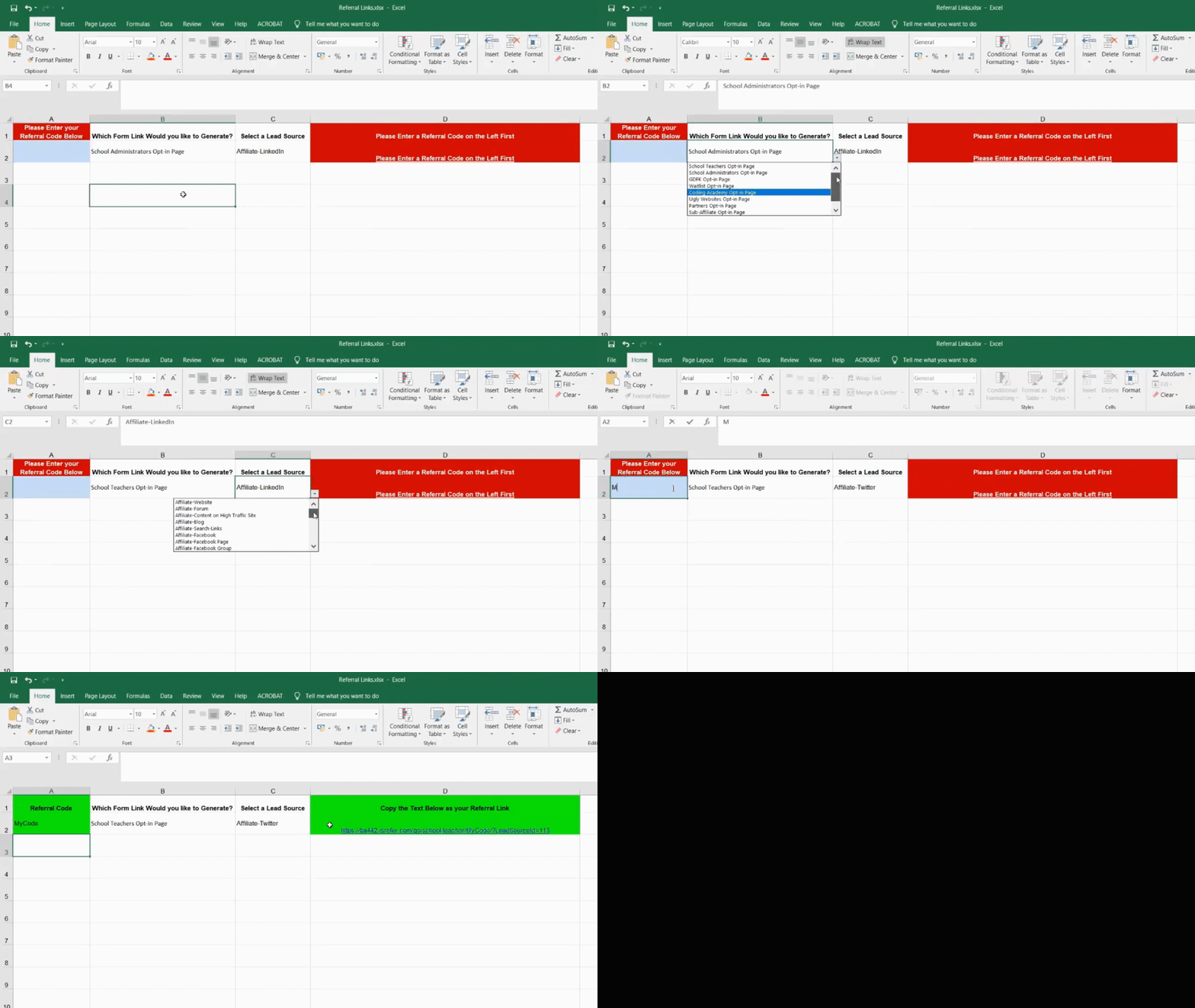
You'll need to copy and paste the links in the last column and send that to the person you want to sell to. As simple as that. That will redirect them to the Webform you have selected
Important Note: Use only these links, they are provided specifically for you. Not doing so may result in you not getting your commission.
TIP: You can use the link to wrap a button or a clickable place a page or app!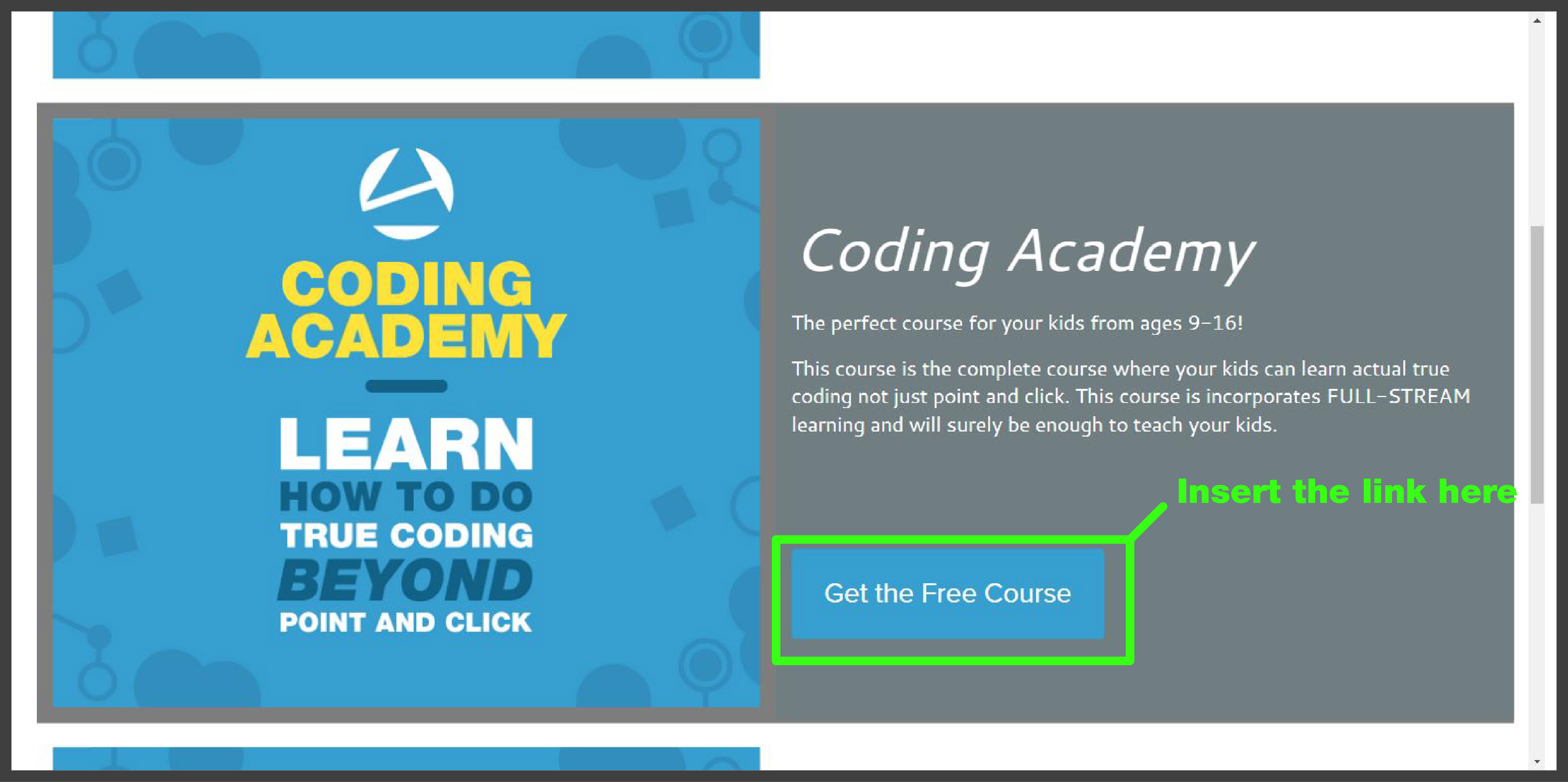

The Reports section gives you access to commission, lead tracking, and sales reports. The My Ledger report will be a valuable tool you can use to access your financial earnings.
How to Use Otter AI to Generate Lecture and Demo Scripts and Outlines
Summary
How can we leverage the hierarchy of learning and Bloom's Taxonomy to create a structured and engaging curriculum?
To leverage the hierarchy of learning and Bloom's Taxonomy to create a structured and engaging curriculum, here are the key steps:
1. Start with the desired course-level outcomes. Identify 3-6 key things you want students to be able to do by the end of the course. Use verbs from the higher levels of Bloom's Taxonomy like "evaluate", "create", "analyze".
2. Break down those high-level outcomes into more granular weekly or module-level objectives. For each week/module, determine what students should be able to do, using verbs that align with the appropriate level of Bloom's Taxonomy (e.g. "identify", "explain", "apply").
3. Map your teaching topics and activities to directly support the learning objectives. Ensure there is a clear connection between what you're teaching and the skills/knowledge students need to demonstrate.
4. Design assessments that allow students to show their mastery of the objectives, progressing from lower-level recall to higher-order application and evaluation.
5. Structure the learning experience to gradually build students' competency. Start with foundational knowledge and comprehension, then provide opportunities to apply, analyze, and ultimately evaluate and create.
6. Incorporate active learning techniques that engage students and get them practicing the desired skills, not just passively consuming information.
By aligning your curriculum design to the hierarchy of learning and Bloom's Taxonomy, you can create a purposeful, scaffolded learning experience that moves students towards the targeted outcomes in an engaging way. The key is maintaining that clear line of sight from your high-level goals down to the weekly activities.
About Us

Hi, it's Josh and Ruth!
We are so glad you stopped by. We are educational practitioners and specialists and partner with educational institutions to help bring transformational learning experiences where they matter most.
"We help teach students to be dreamers, thinkers and doers."
Firstly, we know that teaching is hard on multiple levels.
Getting the "light bulb" to turn on and stay on for students is not easy.
When talking with teachers, this is the type of feedback we hear from them. We commonly hear the following three themes.
Furthermore, there are other common challenges that make teaching and learning even more challenging. We have found these additional challenges fall into one or more of the following five categories.
Automated Video Production Pipeline
This video guides you through setting up an automated video production pipeline, from selecting and testing brand voices using Eleven Labs to pairing them with digital avatars in HeyGen. By following the steps, you'll learn how to catalog and integrate voices, match them with visual characters, and generate preview videos for evaluation. Once you complete the video, you'll be able to efficiently create, test, and organize multiple spokesperson options for your brand's automated content generation. This process empowers you to streamline video production and build a scalable library of branded video assets.
Following are the key things you will be able to do after you watch this demo:
Identify suitable brand voices using generative AI tools.
Catalog and organize voice and avatar options for efficient selection.
Integrate third-party voices into video production platforms.
Pair voices with digital avatars to create compelling spokesperson combinations.
Generate and preview automated video content for evaluation.
Document and track production assets for streamlined workflow.
Select and finalize top spokesperson options for automated content generation.
Introduction to Automated Video Production Pipeline (00:00:00 – 00:00:59)
Josh kicks off the demo by outlining the goal: selecting brand-aligned voices and digital doubles (either your own clone or hired actors), organizing those assets, and laying out the end-to-end steps needed to spin up a fully automated video production pipeline.
Content Sequencing Concept and Cloning (00:00:59 – 00:02:20)
He explains the core idea of building a repeatable sequence of content—cloning a finished production over and over—so you can continually generate new videos by plugging different scripts into the same automated workflow.
Defining Digital Doubles and Voice Types (00:02:20 – 00:03:11)
Josh clarifies terminology (digital twin vs. digital double), walks through the two main “buckets” of voice assets (personality-based clones vs. spokesperson avatars), and discusses how to mix and match them depending on your brand needs.
Selecting Platforms for Generative AI and Deployment (00:03:11 – 00:04:00)
He emphasizes the importance of vetting your generative-AI tools—voice engines and video avatars—and making sure they’re compatible with your target platforms before committing to any given solution.
Brand-Focused Workflow and SRT Utilization (00:04:00 – 00:05:25)
Josh decides to focus on one streamlined method for this demo, using a single SRT transcript file as the “source of truth” for automation—underscoring that a clean, well-formatted SRT is absolute gold when you’re architecting an automated pipeline.
Importing SRT and Leveraging Automation (00:05:25 – 00:07:40)
He shows how to import the SRT into the voice-generation platform, highlighting how the time-coded script drives every subsequent step—from audio rendering to scene assembly.
Setting Up Voice Design in ElevenLabs (00:07:40 – 00:11:49)
A step-by-step walkthrough of testing voice presets, tweaking text lengths, integrating third-party voices, and crafting voice-design prompts to nail down the exact tone and style you want.
Managing Credits and Reviewing Generated Audio (00:11:49 – 00:15:46)
Josh demonstrates how to monitor and conserve your generation credits, preview the rendered audio, swap out placeholder text, and ensure you’re only spending resources on polished clips.
Applying Voiceover and Text Overlays to Video (00:15:46 – 00:19:08)
He attaches the finalized voice track to the video timeline, adds and styles text overlays (centering, contrast adjustments), and assembles the basic video composition ready for export.
Enhancing Prompts with AI Tools for Voice Design (00:19:08 – 00:22:04)
Introduces additional AI utilities for brainstorming and refining your voice-design prompts—showing how to iterate until you get a sample that truly matches your brand voice.
API Key Handling and Asset Export Configuration (00:22:04 – 00:27:28)
A practical guide on securely copying your ElevenLabs API key, configuring export settings (e.g., 4K output), and organizing all generated files into branded folders for easy access.
Frame Rate Considerations and Quality Checks (00:27:28 – 00:31:42)
Notes the default 25 fps setting, explains how frame rate impacts perceived motion, and walks through checking your export quality to avoid any unexpected artifacts.
Avatar Adjustments, Project Naming, and Fallbacks (00:31:42 – 01:05:16)
Josh covers fine-tuning avatar scale and positioning, updating project names for consistency, and setting up fallback workflows if you need to swap voices or visuals mid-pipeline.
Avatar Replacement and Cataloging (00:31:42 – 00:34:06)
Pair your chosen voice with visuals by replacing the default avatar, browsing through the 21 “looks” in each category, using the snipping tool to capture promising thumbnails, and logging each candidate’s name and category in your tracking spreadsheet.
Avatar Testing and Video formatting (00:34:07 – 00:36:24)
Brainstorm voice–visual combinations (e.g. “August”), select a portrait-mode avatar, preview the static image, upload any custom avatars into the pipeline, drag your source video beneath the avatar layer, and confirm the composition and framing.
Voice-Avatar Sync and Quality Comparison (00:36:24 – 00:37:39)
Generate audio samples to compare HeyGen vs. ElevenLabs quality, force-refresh the clip to confirm it’s using the intended voice (e.g. Ryan Kirk), and watch for the spinning indicator to verify successful render.
Preview Generation and File Labeling (00:38:10 – 00:39:11)
Render a 4K preview of the voice-avatar pairing, then label the export asset with your convention (e.g. 001_RyanKirk_CharlieAvatar) so each test remains organized and easily identifiable.
Pipeline Duplication for Variant Testing (00:39:11 – 00:41:15)
Duplicate the entire sequence to create “Test 002,” swap in a new avatar (such as Colton), explore lifestyle/UGC categories, and note how background removal and frame size affect the final look.
Background Removal and Frame Adjustments (00:41:15 – 00:42:32)
Apply the background-remover tool to avatars with built-in backgrounds, observe any cut-offs (like arms being cropped), tweak the canvas framing, and decide between static vs. transparent backgrounds based on brand needs.
Third-Party Voice Integration Workflow (00:42:32 – 00:44:03)
In the “My Voices” tab, toggle on integrated voices (e.g. Charlie), heart your favorites so they surface first, preview each sample, and ensure the API integration is active before proceeding.
Voice Audition Labeling and Mood Board Documentation (00:44:03 – 00:47:09)
Name each audition (e.g. 002_CharlieAvatar), update your mood board with snipped thumbnails, record which browser tab or category each came from, and keep this documentation up to date for reproducibility.
Frame Rate and Credit Management (00:47:09 – 00:48:06)
Note the default 25 fps setting—mismatches can cause audio sync issues—toggle off “Avatar 4” if you’re on an unlimited plan, and monitor your generation credits to avoid unexpected limits.
Styling and Folder Organization (00:48:06 – 00:49:29)
Adjust text overlay colors to maintain contrast (match your brand palette), create new folders for each batch, and standardize your output directory structure so you know exactly where each rendered clip lives.
Option Preview and Cataloging Workflow (00:49:30 – 00:55:51)
Refresh thumbnails, scroll through voice-avatar combos, assign option numbers, screenshot grids of candidates, and log each pairing’s status (“Yes,” “Maybe,” “No”) in your spreadsheet.
Iteration Process and Consistency Notes (00:55:51 – 00:57:23)
Always regenerate every variation (never reuse stale renders), note any limitations (e.g. animated text can cover on-screen elements), and keep your naming and documentation consistent so the pipeline remains bullet-proof.
Ranking Options and Visual Separators (00:57:24 – 01:02:40)
Introduce visual separators in your catalog (e.g. blank rows), rank the top voice-avatar combos, screenshot your “definite yes” list, and preserve those as templates for future batches.
Additional Voice Integration: Amelia (01:02:40 – 01:04:33)
Search for “Amelia” in your voice library, verify whether it’s built-in or needs third-party integration, add it to favorites, preview the sample, and record its ID for consistent reuse.
Final Voice Candidate Integration (01:04:33 – 01:05:16)
Confirm Amelia’s render, then search for any last candidates (e.g. “Analore”), heart and test them, catalog the results, and ensure each new voice is fully integrated into the pipeline.
Final Pipeline Recap and Scale Duplication (01:07:40 – 01:08:34)
Recap how you’ve selected your final set of voices and avatars, finalize your naming conventions, and highlight that you can now duplicate this entire automated workflow to churn out an endless library of on-brand social-media videos.
Planning the Big View
The video introduces the concept of setting up a "home base" for your online business using AMP. This home base will include a main website, blog, lead magnets, online memberships, and capabilities for internal and external training. The goal is to provide a comprehensive platform where you can manage all aspects of your online presence and activities without needing to code.
Here are the key things you will be able to do after you watch this demo:
Plan the information architecture and site map for your home base website.
Implement a main marketing website, blog, and lead magnets using AMP.
Manage unlimited online memberships, courses, and subscription options within AMP.
Develop internal company training and external customer training programs on your AMP platform.
Integrate sales and marketing funnels into your AMP-powered home base.
Consolidate your online business activities into a single, code-free platform.
Setting Up Home Base and Information Architecture (0:00)
Josh Lomelino introduces the concept of launching a website and the importance of having a clear information architecture.
The main website will include key information, marketing messages, and contact details.
Josh mentions the possibility of consolidating various online elements like blogs and marketing sites into one central location.
The goal is to use AMP to manage all online business activities efficiently.
Components of Home Base (2:16)
Josh explains that home base will include the main website and a blog.
The blog will feature unlimited articles to attract traffic and address specific pain points.
Lead magnets, such as free resources, training, and digital downloads, can be used to drive traffic to the site.
Online memberships, both free and paid, can be managed through AMP, offering various classes and subscription models.
Handling Internal and External Training (3:29)
Josh discusses the need for internal company training and external customer training.
A knowledge base is essential for providing key information and support.
AMP allows for the management of multiple memberships and classes, including one-time payments and ongoing subscriptions.
The platform supports a variety of training needs, from company training to customer training.
Sales and Marketing Integration (4:33)
Josh emphasizes the importance of integrating sales and marketing within AMP.
Marketing funnels are crucial for converting incoming traffic into sales.
Home base serves as the central operating system for all business activities, including digital and physical products.
The goal is to handle everything from company training to customer-facing training without the need for coding.
Planning and Organizing Content (6:35)
Josh outlines the process of planning and organizing the site, starting with a minimum viable product (MVP).
The next video will cover the basics of building a site map and thinking about the site's vision.
The approach will be incremental, starting small and building up from there.
The ultimate goal is to have a clear plan for content organization, implementation, and growth.
Creating your first page
This demo teaches you how to quickly and easily create your first page within the CMS system. You will learn how to set up the page, including configuring the URL, description, and keywords for optimal SEO. The demo also shows you how to effortlessly add and format content, with the system automatically generating the necessary HTML tags. Finally, you will discover how to manage and modify your pages, as well as organize your content using a category-based system, empowering you to scale your website with thousands of pages.
Here are the key things you will be able to do after you watch this demo:
Log in to the CMS
Create a new content page with the title "About Us"
Specify the URL for the "About Us" page
Add a description and keywords for the "About Us" page
Enter content for the "About Us" page
Observe the automatic formatting of the content
Modify the "About Us" page content as needed
Change the URL for the "About Us" page if required
Add a link to the "About Us" page in the site map documentation
Categorize content for better organization and management
Manage large amounts of content using the centralized database
Introduction and Initial Setup (0:00 - 0:30)
Explains the purpose of the demo: teaching how to create the first page
Mentions the importance of earlier steps like creating information architecture diagrams
Introduces the example pages: home, about, services, and products
URL and Description Configuration (0:30 - 1:30)
Discusses the importance of the URL for SEO and indexing
Recommends using dashes between words for better search engine visibility
Explains the flexibility of the URL and the necessity of a description for SEO
Mentions the use of keywords, both manually added and through a keyword module, and their role in SEO
Notes that advanced settings will be customized later, focusing on the basic configuration
Content Entry and formatting (1:30 - 2:30)
Demonstrates entering content into the "about us" page
Emphasizes the ease of copying and pasting from various sources like Word or Google Docs
Highlights the automatic formatting of HTML tags for clean and well-structured code
Explains the use of semantic tags for bolding, italicizing, and other formatting
Shows how to submit the content to the database and refresh the page to see the updated content
Advanced Features and URL Management (2:30 - 3:30)
Introduces advanced features like creating headers, branding images, and integrating various media types
Explains the process of modifying and deleting pages, using the "about us" page as an example
Discusses the importance of managing URLs, including changing URLs and the potential need to relink pages
Mentions the use of related link modules for automatic URL updates and the simplicity of changing URLs without creating new records
Content Management and Categorization (3:30 - 4:30)
Demonstrates linking pages within the site map for easy navigation and content management
Explains the concept of a category-based system for managing large amounts of content
Highlights the centralized database for easy content updates and the ability to categorize content
Concludes the demo by summarizing the process of creating, viewing, and publishing the first page online, emphasizing the scalability of the system
Keywords: homepage
Home Page Setup and Configuration
By following the steps demonstrated, users will be able to: Fully customize the welcome text, image sliders, and announcements on the home page to match their branding and highlight key content. They will also learn how to efficiently manage the global navigation, including creating drop-down menus and updating footer links, to establish a cohesive information architecture across their entire website. Additionally, users will gain the skills to ensure their home page layout and navigation are mobile-responsive, enabling a seamless experience for visitors on any device.
Here are the key things you will be able to do after you watch this demo:
Modify the home page welcome text to include custom content and links.
Add new image sliders to the home page and link them to specific pages.
Create and configure new announcements on the home page, including setting their order and linking to URLs.
Restructure the main navigation menu by adding new drop-down items and links.
Customize the footer navigation by removing or updating links as needed.
Modify the quick launch menu buttons on the home page to direct users to key areas.
Backup and restore the navigation structure to ensure consistency across the website.
Leverage color-coding and text editors to simplify the process of updating global navigation.
Ensure the home page layout and navigation are mobile-responsive.
Implement an organized information architecture to support growth of website content.
Customizing the Home Page Welcome Text (0:00:00)
Josh Lomelino explains the process of modifying and deleting content in the CMS to customize the home page welcome text.
He demonstrates changing the welcome text and shows how to link out to social media and add images.
Josh highlights the flexibility of the welcome text block, including the ability to link out to external websites or open images in a new window.
He mentions the ability to insert images and adjust their positioning within the welcome text block.
Configuring Home Page Sliders (0:09:03)
Josh discusses the capability of having multiple image galleries and sliders on the home page.
He explains the process of modifying or deleting content in the CMS to add or change sliders.
Josh demonstrates how to link sliders to specific pages on the website and manage images using the media manager.
He provides tips on ensuring URLs are correctly formatted and how to update sliders without issues with content delivery networks (CDNs).
Managing Home Page Announcements (0:16:05)
Josh shows how to modify and delete announcements on the home page.
He explains the process of uploading new files and linking them to specific pages.
Josh demonstrates how to set announcements to be invisible and how to order them.
He provides tips on using templates for announcements and managing image editing within AMP.
Customizing Global Navigation (0:25:44)
Josh explains the process of modifying the top navigation bar in the CMS.
He demonstrates how to create and manage drop-down menus and simple links.
Josh recommends creating backups of the navigation structure and using VS Code for easier management.
He provides tips on linking navigation items to specific pages and managing the structure of drop-down menus.
Configuring the Footer and Quick Launch Menu (0:31:25)
Josh explains how to modify the footer in the CMS, including adding links and managing the logo.
He demonstrates how to create and manage the Quick Launch menu on the home page.
Josh provides tips on ensuring the footer and Quick Launch menu are mobile responsive.
He explains the process of updating the footer and Quick Launch menu with new links and buttons.
Your End User Agreements
This demo shows how to set up the necessary legal agreements for your website, including a Terms of Service, Privacy Policy, and Cookies Policy. You'll learn how to create these pages in the CMS, customize the content, and link them throughout your website. By the end, you'll have the framework in place to automatically capture user agreement to your legal terms when they create an account or interact with your site.
Create a Privacy Policy page with the URL "/privacy-policy".
Create a Terms and Conditions page with the URL "/terms-and-conditions".
Create a Cookies Policy page with the URL "/cookies-policy".
Copy and paste the company's specific Terms of Use, Privacy Policy, and Cookies Policy content into the respective pages.
Update the login page link in the main navigation to point to the client user login page.
Setting Up Licensing Agreements in AMP (0:09)
Josh Lomelino explains the process of setting up licensing agreements, including end-user agreements, privacy policies, and cookies policies.
AMP automates the process of capturing user agreements, including timestamps when users create accounts.
Customization of Terms of Use, Privacy Policy, and Cookies Policy is necessary, often done with the help of attorneys or services like LegalZoom.
The demo focuses on how to set up these legal agreements in the AMP system.
Creating and Linking Legal Pages (1:52)
Josh demonstrates creating a new page for the Privacy Policy, Terms and Conditions, and Cookies Policy in the CMS.
Each page is given a specific URL and description, and categories can be created for better organization.
The URLs for these pages are crucial for AMP to capture user agreements automatically.
Josh shows how to link these legal pages from the login page and other relevant pages on the website.
Handling User Consent and Cookies (2:31)
Josh explains the process of capturing user consent for Terms of Service, Privacy Policy, and Cookies Policy when users create accounts.
AMP displays a timestamp of when users agree to these policies, which can be reviewed later.
For users who visit the site without creating an account, AMP displays a passive cookies notice.
Users can click "Learn More" to view the Cookies Policy, which is stored in their browser once accepted.
Setting Up Legal Document Pages (5:26)
Josh demonstrates copying and pasting legal documents into the created pages for Terms and Conditions, Privacy Policy, and Cookies Policy.
AMP formats the documents automatically, and users can manually adjust styles if needed.
The process involves submitting changes to the database to reflect the updated legal documents.
Josh emphasizes the importance of working with attorneys or legal services to craft specific legal agreements for the business.
Finalizing the Setup and User Experience (10:09)
Josh updates the login page to link to the client user portal, ensuring users can access the Terms and Conditions and Privacy Policy.
Users can create new accounts and agree to the terms, with the timestamp captured in the system.
The demo covers the end-to-end process of handling user agreements and cookies policies.
Josh encourages participants to ask questions and continue building their legal agreements and user management systems.
Keywords: Anomaly AMP, digital engagement, online presence, content management, marketing funnels, evergreen content, user experience, scalability, healthcare industry, education sector, e-commerce, social media integration, customizable templates
Welcome to AMP

Here are the top things you will be able to do when you complete this module.
Introduction to AMP

Here are the top things you will be able to do when you complete this module.
Core Components


Coming Soon

Coming Soon
Creating and Modifying Content
This demo provides a comprehensive overview of the content management capabilities within the platform. Viewers will learn how to efficiently create, customize, and publish content pages, leveraging advanced features like related links, multimedia integration, and mobile-responsive design. By the end of the session, users will be empowered to rapidly develop and manage engaging, interconnected content that can be easily shared across social media to drive audience growth and engagement.
Here are the key things you will be able to do after you watch this demo:
Create and customize content pages within the CMS, including setting URLs, descriptions, keywords, and search engine priority
Utilize advanced features like left/right panels, side menus, classes, units, folders, and categories to organize content
Manage page metadata like publishing dates, authors, and social media sharing settings
Integrate multimedia content like banners, galleries, and videos into pages
Leverage the related links functionality to build interconnected content networks
Auto-generate web-friendly HTML from external sources like Word or Google Docs
Efficiently insert and format images within content pages
Preview and validate the mobile responsiveness of content pages
Understand how to make content shareable on social media to drive engagement and traffic
Gain familiarity with the overall content management workflow and tools within the system
Creating and Modifying Content: Introduction and Initial Setup (0:00)
Josh Lomelino introduces the session, focusing on creating and modifying content in the site.
He explains the process of creating a page, starting with a join page to onboard new members.
Josh demonstrates how to set URLs, descriptions, and keywords for SEO purposes.
He highlights the importance of search engine priority and the ability to create left and right panels with side menus.
Advanced Features and Customization (4:04)
Josh discusses the ability to create classes, units, folders, and categories within the content management system.
He explains the options for specifying publishing dates, authors, and displaying authorship information.
Josh demonstrates how to customize page banners, including the use of fixed and full-width headers.
He shows how to integrate social media sharing and create galleries and video content.
Social Media Integration and Keyword Visibility (4:19)
Josh explains the process of setting social media visibility and the benefits of having keywords visible for internal searches.
He demonstrates how to create a keyword cloud for users to drill down into content based on keywords.
Josh shows how to modify the join page by setting keywords to invisible and adding content about joining the membership.
He highlights the importance of making content shareable on social networks and managing social media visibility.
Rapid Development and Related Links (7:58)
Josh demonstrates how to add additional content to the join page, including related links and external resources.
He explains the power of the related link network and the ability to filter search results in real-time.
Josh shows how to link to items on the main site, blog, and external resources like Google Docs.
He explains the process of reordering items and managing external links within the system.
Auto-Generation of Content and Image Management (12:28)
Josh demonstrates how to auto-generate HTML from Word or Google Docs, maintaining web-friendly code.
He explains the process of copying and pasting content from Word, including formatting and image management.
Josh shows how to insert images, set descriptions, and format images to wrap text around them.
He highlights the ability to create sales funnels and link to e-commerce within the system.
Mobile Preview and Final Touches (18:58)
Josh explains how to preview the site on different form factors using developer tools in browsers.
He demonstrates the responsiveness of images and the ability to view the site on various devices.
Josh highlights the benefits of social media sharing and the potential for content to go viral.
He concludes by summarizing the process of creating and modifying content, emphasizing the ease of use and flexibility of the system.
The announcements component allows you to easily manage and publish important messages and callouts on your website's home page. You can create announcements with images, dates, descriptions, and links to drive traffic to specific pages or files. After watching this demo, you'll be able to efficiently update and modify announcements as needed to keep your members informed about the latest news and information.
The announcements component allows you to easily manage and publish important messages and callouts on your website's home page. You can create announcements with images, dates, descriptions, and links to drive traffic to specific pages or files. After watching this demo, you'll be able to efficiently update and modify announcements as needed to keep your members informed about the latest news and information.
Here are the key things you will be able to do after you watch this demo:
Manage multiple announcements on the home page of a website
Integrate images, dates, descriptions, and links into announcements
Drive traffic to specific pages or files using announcement click-through links
Update and modify existing announcements as needed
Ensure announcements are mobile responsive across devices
Leverage announcements to keep members informed about important information
Organize announcements in a specific order to prioritize content
Utilize the integrated file management system to select announcement images
Understand the importance of following template guidelines for image dimensions
Efficiently create, submit, and publish new announcements in the CMS
Announcements Component Overview (0:00)
Josh Lomelino introduces the announcements component, which allows managing multiple announcements on the home page of a site.
Announcements can include images, dates, descriptions, and links to download files or redirect to different areas of the site.
The component is designed to help manage important messages and callouts effectively.
Josh explains that the announcements will be mobile responsive, working on various devices like mobile, tablet, and desktop.
Creating and Managing Announcements (0:38)
Josh demonstrates how to create a new announcement in the CMS by clicking "Create Announcement."
He inputs a title for the announcement, "Example Announcement," and selects a file from the integrated file management system.
Josh highlights the importance of using the provided template for file dimensions to ensure proper formatting.
He explains how to edit image dimensions and mentions that the announcements are mobile responsive.
Adding Links and Dates to Announcements (2:14)
Josh shows how to add a click-through hyperlink to an image, which can redirect users to a specific page.
The order of announcements is determined by the order in which they are created, with the most recent announcement appearing first.
Users can choose to include a date for the announcement, which will automatically default to the current date if not specified.
Josh provides an example of setting a date and text for an announcement and submitting it to the database.
Updating and Modifying Announcements (3:36)
Josh explains that once an announcement is submitted, it will be displayed on the home page with the specified date and text.
He demonstrates how to modify an existing announcement by changing the text and adding a new URL or file.
Users can update the announcement to drive traffic to specific pages or download files.
Josh emphasizes the flexibility of the announcements component in managing and updating important information on the home page.
Driving Traffic and Keeping Members Informed (4:52)
Josh discusses the versatility of the announcements component in driving traffic to various parts of the site.
He provides examples of how to use announcements to keep members informed about new blog posts or conference speaker lineups.
The component allows for the easy management of current and relevant information on the home page.
Josh concludes by reiterating the importance of keeping the home page updated with important announcements to keep members engaged and informed.
Image Slider Component Demo
This video provides a comprehensive guide on how to set up and optimize image sliders for websites with a focus on mobile-first design. Viewers will learn how to leverage pre-designed slider templates, properly size and export slider images, and integrate the sliders into a content management system (CMS) while ensuring optimal responsiveness across different devices and form factors. By following the steps demonstrated, users will gain the skills to create high-quality, mobile-friendly image sliders that provide an engaging and seamless experience for their website visitors.
1172 pixels wide by 580 pixels tall (1172 x 580) are the best dimensions for the billions of devices on the market. That's what we have found is ideal and will work everywhere. With the template linked on this page in the supplemental resources (also shown in this demo) you can drag and drop images into sliders. Or you can make your very own images from scratch using the concepts shown in the demo.
Understand the importance of mobile-first design and responsive layout considerations when setting up image sliders on a website.
Identify the safe zones and optimal image dimensions for creating mobile-friendly sliders that avoid text and content cutoff.
Utilize developer tools to test and analyze the responsiveness of image sliders across different device form factors and orientations.
Access and leverage pre-designed slider templates to quickly create high-quality, mobile-optimized sliders.
Effectively edit, export, and optimize slider images for web performance, ensuring fast loading times and minimal bandwidth consumption.
Integrate and manage slider images within a content management system (CMS), including uploading, cropping, and linking functionality.
Apply best practices for maintaining the recommended slider image dimensions and safe zones when directly editing and modifying images in the CMS.
Setting Up Image Sliders on Websites (0:00)
Josh Lomelino introduces the topic of setting up image sliders on websites, emphasizing their use on the home page and other pages.
He highlights the importance of mobile responsive design, showing how sliders can be clicked through and swiped on different devices.
Josh explains the concept of mobile-first design and how to use developer tools to toggle between different device formats.
He mentions the importance of optimizing sliders for various form factors, including landscape and portrait modes.
Optimizing Sliders for Mobile Responsive Design (2:01)
Josh discusses the challenges of ensuring text visibility and avoiding text cutoff in sliders.
He demonstrates how to test sliders using developer tools and highlights the importance of keeping key information within the safe zone.
Josh shows an example of a slider that is not optimized and compares it to a well-optimized one, emphasizing the need for proper image cropping.
He explains how to use developer tools to analyze the responsiveness of sliders on different devices.
Using Templates for Image Sliders (4:28)
Josh introduces templates linked on the page that help users create amazing sliders with minimal effort.
He explains how to use the home page slider design template in Photoshop or other applications like GIMP or Canva.
Josh demonstrates how to open the PSD file, turn visibility on and off for different slider layouts, and add text overlays.
He emphasizes the importance of safe regions and proper image dimensions for optimal display on various devices.
Implementing and Optimizing Sliders (10:13)
Josh shows how to drag and drop images into the template and export them for use on the website.
He explains the importance of optimizing images for mobile to ensure fast loading times and minimal bandwidth consumption.
Josh demonstrates how to export images using Photoshop's "Save for Web" feature and adjust file sizes for optimal performance.
He shows how to upload and integrate the exported image into the CMS, ensuring proper linking and formatting.
Managing Images in the CMS (13:22)
Josh explains how to modify existing sliders or create new ones in the CMS.
He demonstrates how to specify the number of items in a slider and link images to specific pages.
Josh shows how to upload images directly into the CMS and ensure they are properly formatted and linked.
He explains how to use the CMS to crop and modify images directly, maintaining the recommended dimensions for mobile responsiveness.
Master Script Framework
After completing this video, viewers will be able to develop a master script framework for producing a full year of unique, inspirational Instagram reels. They will learn how to batch-create scripts, add descriptions and hashtags, and spot-check content for quality and consistency. The video guides users through automating the content creation process, organizing everything in one place, and preparing for efficient scheduling and posting. By following these steps, viewers can streamline their social media production and ensure their messaging remains engaging and on-brand.
Here are the key things you will be able to do after you watch this demo:
Develop a master script framework for content creation
Generate and batch unique weekly scripts
Spot-check and refine content for quality and consistency
Automate the production and organization of social media assets
Schedule and prepare posts for efficient publishing
Integrate descriptions and hashtags for each script
Critique and adjust content to maintain brand messaging
Developing the Master Script Framework 0:09
Josh Lomelino explains the importance of developing a master script framework to allow AI to rapidly produce content.
The sequence is a 52-week sequence with the final outcome being Instagram reels, which will also be used for ads.
The feedback loop will be used to create Canvas slides for simple posts on Facebook and Instagram.
Josh will be working on a startup product that is in its beginning stages, creating content from scratch.
Initial Tests and Experimentation 1:47
Josh shows a demo of initial tests to figure out how to proceed with social media content.
The first test involves a digital spokesperson promoting a game, with different voices and accents.
Josh emphasizes the need for 52 weeks of content and trains ChatGPT on the product.
The process involves starting with a brand new chat and training ChatGPT on the game description.
Training ChatGPT and Generating Scripts 5:26
Josh begins training ChatGPT by asking for a 15-second script for an Instagram reel.
The goal is to generate a sequence of 52 video scripts for Instagram reels.
Josh requests ChatGPT to provide a list of titles thematically broken down for each week.
The focus is on creating thought-provoking content that generates interest and shareability.
Refining the Scripts and Thematic Breakdown 9:09
Josh continues to refine the scripts, ensuring they are thematically broken down.
The process involves saving snapshots of the training process to keep the framework on track.
Josh emphasizes the importance of critiquing and providing feedback to steer the model in the right direction.
The goal is to create a strong starting point for the rest of the social media calendar.
Finalizing the Scripts and Automating Production 16:18
Josh finalizes the first script as a test and generates the video in 4K.
The process involves duplicating the project, pasting the script, and using different voices.
Josh demonstrates how to generate all 52 weeks of scripts, ensuring each week is unique and inspirational.
The final step involves copying and pasting the scripts into a Google Doc for easy management and scheduling.
Managing the Social Media Calendar 24:44
Josh explains the importance of having Instagram descriptions and hashtags for each script.
The process involves saving the framework and ensuring all future scripts follow the combined format.
Josh spot checks the scripts to ensure they stay on track and provide feedback as needed.
The goal is to have everything ready for scheduling and posting on social media platforms.
Setting Up the Video Production Pipeline 32:43
Josh outlines the next steps for setting up the video production pipeline.
This includes selecting voices, actors, and actresses for the brand.
The process involves using Showbiz to produce each of the 52 videos.
Josh emphasizes the importance of having a fast and easy pipeline for production.
Finalizing the Year's Worth of Content 41:53
Josh continues to batch produce the remaining scripts, ensuring they are unique and inspirational.
The process involves spot checking the scripts and providing feedback to keep the model on track.
Josh demonstrates how to manage the entire year's worth of content in one spot.
The final step involves generating the entire year's content and ensuring it is ready for scheduling and posting.
Anomaly AMP Channel Partner Starting
Josh Lomelino is the founder of Anomaly Studios and creator of the Anomaly AMP platform. He previously ran a service-based business but struggled with the constant fight for survival and lack of control over his time and finances. Anomaly AMP is a platform he built to automate and scale his business, providing a way to earn recurring passive. Now he's opening up that same passive income power available to through an affiliate program that offers commissions on referred customers simply by sharing our free resources.
After you have watched the video above, create your account for the channel partner program at the bottom of this page or by clicking here.
To create financial projections go to our revenue calculator and click “recurring.” Then enter $99.4 for 20% of the Anomaly A.M.P. subscription and enter 1 customer per month (or the number you think you can get). As you enter customers per month for onboarding the financial information appears below as monthly, annually, and cumulative across years if you keep up with the cadence of one customer per month on average. This compounds exponentially.
Launch the Calculator and click the recurring tab.
One Customer Per Month Example


Five Customers Per Month Example


Keywords: Content,creation,workflow,time-saving,high-quality,student,outcomes,audio,file,screen,recording,Camtasia,OBS,generative,AI,digital,double,course,matrix,instructional,design,Otter,PowerPoint,slides
Josh Lomelino's ultimate content creation workflow is designed to dramatically reduce course development time from months to weeks or days by leveraging various content generation methods. His approach ranges from simple audio-only techniques to fully automated workflows using generative AI, with a focus on delivering clear, measurable learning outcomes. The workflow encompasses four progressive methods, starting with basic audio creation and advancing to complex AI-driven content generation that can produce digital avatars, slides, and video content from simple text prompts. By providing a flexible, scalable approach, Lomelino enables content creators to efficiently develop high-quality online courses and educational materials.
Josh Lomelino's ultimate content creation workflow is designed to dramatically reduce course development time from months to weeks or days by leveraging various content generation methods. His approach ranges from simple audio-only techniques to fully automated workflows using generative AI, with a focus on delivering clear, measurable learning outcomes. The workflow encompasses four progressive methods, starting with basic audio creation and advancing to complex AI-driven content generation that can produce digital avatars, slides, and video content from simple text prompts. By providing a flexible, scalable approach, Lomelino enables content creators to efficiently develop high-quality online courses and educational materials.
After this demo, learners will be able to:
Understand the Four Methods of Content Creation
Differentiate between audio-only, screen recording, webcam, and fully automated content generation techniques
Recognize the strengths and limitations of each workflow method
Develop Efficient Content Generation Skills
Apply AI tools like Otter AI, Claude AI, and ChatGPT for script drafting and refinement
Create high-quality educational content using streamlined workflows
Leverage AI Technologies for Course Development
Utilize generative AI platforms for audio, video, and slide creation
Transform content development timelines from months to weeks
Design Learner-Centered Educational Content
Craft clear, measurable learning outcomes
Develop instructional materials that focus on practical skills and immediate application
Implement Scalable Content Production Strategies
Overview of Content Creation Workflow 0:09
Josh Lomelino introduces the ultimate content creation workflow class, aiming to reduce course development time from months to weeks or days.
The course will cover a blend of simple to fully automated workflows, starting with simpler methods for quick wins and progressing to advanced approaches.
Emphasis is placed on delivering clear, measurable outcomes and setting up necessary systems from the start.
The course will cover creating basic audio files, screen recording using tools like Camtasia or OBS, and fully automated workflows using generative AI.
Methods of Content Creation 1:30
Josh Lomelino outlines four methods of content creation, ranging from simple to fully automated, with each method providing a different level of complexity and automation.
Method one involves creating audio-only content using tools like Claude AI or ChatGPT to refine scripts and generate final audio files.
Method two involves real-time screen recording using software like Camtasia, capturing both screen content and voice simultaneously.
Method three combines screen recording with live webcam footage, allowing for a more dynamic on-screen presence.
Method four uses AI to generate a digital double video from a recorded vocal track, with AI also generating PowerPoint or Canvas slides.
Detailed Explanation of Methods 2:49
Method one: Josh explains the process of refining raw text into final audio scripts using AI tools and recording the final audio file manually or with AI.
Method two: Josh describes using Camtasia to record both screen and voice simultaneously, minimizing post-production work and suitable for relaxed, adaptable work.
Method three: Josh details recording both screen and webcam footage in one take, requiring careful setup for a consistent on-camera presence.
Method four: Josh explains using AI to generate a digital double video from a recorded vocal track, with AI also generating slides synchronized to the transcript.
Implementation and Integration 10:04
Josh emphasizes the importance of starting with method one and progressing sequentially to method four, explaining the workflows and specific tools used to optimize the process.
The course is designed to provide strategies that can be implemented immediately, with each method providing a different level of automation and complexity.
Josh will demonstrate how to generate scripts, auto-generate audio files, and record both audio and video manually, as well as how to automatically generate PowerPoint and Canvas slides using AI.
The final video will show how to integrate these workflows into Anomaly AMP, providing learners with contextual information and a timeline breakdown.
Keywords: Overview, Demo, Audio, Recording, Process, Tracks, Methods, Production, Manual, AI, Generated, Voices, Automatically, Instructional, Aid, Synthesizing, Information, Guide, Instruct, Persuade, Sales, Potential, Catalyst, Automating, Content, Creation, Recorded, Serve, Presentation, Slides, PowerPoint, Canva, Animated, Effects, Virtual, Camera, Overlay, Automated, Execute, Fundamentals, Vocal, Performance, Techniques, Apply, Screen, Captures, Principles
This video provides a comprehensive overview of audio production techniques, teaching viewers how to create powerful audio tracks through manual recording and AI-generated voices. Participants will learn to leverage audio as a versatile tool for instructional content, sales support, and multimedia creation, including automated slide generation and virtual presentations. The demonstration will equip learners with fundamental vocal performance skills applicable to screen captures, on-camera presentations, and various content creation scenarios. By mastering these techniques, viewers can transform their approach to creating engaging, professional-quality audio and visual content.
This video provides a comprehensive overview of audio production techniques, teaching viewers how to create powerful audio tracks through manual recording and AI-generated voices. Participants will learn to leverage audio as a versatile tool for instructional content, sales support, and multimedia creation, including automated slide generation and virtual presentations. The demonstration will equip learners with fundamental vocal performance skills applicable to screen captures, on-camera presentations, and various content creation scenarios. By mastering these techniques, viewers can transform their approach to creating engaging, professional-quality audio and visual content.
Here are the key things you will be able to do after you watch this demo:
Record high-quality audio tracks manually
Generate AI-powered voice narrations from text scripts
Use audio as an instructional and persuasive communication tool
Automate presentation slide creation using audio tracks
Create virtual on-camera presentations with overlaid audio
Apply vocal performance techniques to screen captures
Synthesize information effectively through audio narration
Leverage audio for sales and instructional content development
Transform text scripts into multimedia presentations
Develop professional-grade content using both manual and AI-driven audio production methods
Overview of Audio Recording Process 0:08
Josh Lomelino introduces the demo, focusing on the process of recording audio tracks.
He mentions that the overview video will demonstrate two methods for audio production: manual recording and AI-generated voices.
The video aims to outline various uses of audio, emphasizing its role as an instructional aid and its potential in automating content creation.
Josh highlights that audio can synthesize information to guide, instruct, persuade, and support sales.
Applications of Audio in Content Creation 0:51
Josh explains that audio tracks can be used directly as instructional aids, providing guidance and support.
He elaborates on audio's role in automating multiple aspects of content creation, whether recorded manually or generated with AI.
An audio track can create presentation slides in applications like PowerPoint or Canva, complete with animated effects.
The audio can also be used to generate virtual on-camera presentations that overlay on automated slides.
Upcoming Demos and Techniques 1:40
Josh mentions that upcoming demos will show how to execute both methods of audio production: manual recording and AI-generated voice production.
He emphasizes the importance of mastering the fundamentals of delivering a strong vocal performance.
These techniques can be applied to various areas, including live screen captures and on-camera presentations.
Josh concludes the high-level overview, stating that he will see the audience in the next video.
Keywords: audio,recording,microphone,quality,live,studio,interface,phantom,power,sample,rate,uncompressed,format,pop,filter,level,balancing,Camtasia,Studio,file,organization,voice,clone,AI,avatar,sound,absorption
This video provides a comprehensive guide to professional audio recording for content creators, focusing on essential equipment and techniques for high-quality sound production. Viewers will learn how to select the right microphone, set up a proper recording environment, and use audio interfaces and editing tools to capture clean, professional-grade audio. By following Josh Lomelino's expert advice, participants will be able to create polished audio recordings suitable for workshops, demos, podcasts, and even AI-generated video content. The tutorial equips creators with practical skills to improve their audio recording process and produce more engaging, professional-sounding content.
This video provides a comprehensive guide to professional audio recording for content creators, focusing on essential equipment and techniques for high-quality sound production. Viewers will learn how to select the right microphone, set up a proper recording environment, and use audio interfaces and editing tools to capture clean, professional-grade audio. By following Josh Lomelino's expert advice, participants will be able to create polished audio recordings suitable for workshops, demos, podcasts, and even AI-generated video content. The tutorial equips creators with practical skills to improve their audio recording process and produce more engaging, professional-sounding content.
Here are the key things you will be able to do after you watch this demo:
Select an appropriate high-quality microphone for professional audio recording
Set up a clean, noise-free recording environment
Configure audio interfaces and software for optimal sound capture
Choose the correct sample rate and recording format
Use a pop filter and mic positioning techniques to improve audio quality
Perform audio test recordings and evaluate sound levels
Utilize audio editing tools for recording and post-production
Implement file organization strategies for audio projects
Export audio files in various formats for different content needs
Create consistent, professional-grade audio recordings for workshops, demos, and presentations
Prepare audio recordings for potential AI avatar or voice clone generation
Troubleshoot common audio recording and equipment setup challenges
Basic Method of Production 0:09
Josh Lomelino explains the simplicity and power of recording thoughts and ideas using just a microphone.
Live recordings during workshops or demos are more engaging but harder to edit if mistakes are made.
Studio recordings allow for pauses and polished takes but require maintaining a natural and conversational tone.
The importance of a high-quality microphone and a quiet, clean recording space is emphasized.
Microphone Setup and Recording Quality 1:31
Josh recommends the AKG condenser mic for its clean, detailed sound, which requires phantom power.
The Shure 57 microphone is mentioned as a versatile option for various recording situations.
The Zoom H6 USB audio interface is preferred for its compatibility with various software like Camtasia.
Recording at 48,000 Hz instead of the default 44.1 Hz is suggested to preserve audio detail.
Audio Recording Practices 3:18
Josh advises recording in an uncompressed format like WAV until the final export to avoid audio degradation.
Ensuring the computer and audio interface are set to the same sample rate prevents speed mismatches.
The use of a pop filter and an adjustable mic arm helps maintain consistent audio quality.
Test recordings and listening on different devices help ensure balanced sound levels.
Audio Editing and Tools 4:53
Josh mentions various audio editing tools like Audacity, Adobe Audition, Pro Tools, and FL Studio.
Camtasia Studio is recommended for its convenience in recording and managing audio projects.
The Auto Normalize feature in Camtasia helps maintain consistent volume throughout recordings.
Exporting recordings as MP3s allows for generating on-camera videos using AI avatars.
File Organization and Studio Setup 5:55
A consistent naming system for recordings and exports is crucial for easy retrieval and updates.
Avoiding rooms with echo and using soft materials to absorb sound helps improve recording quality.
A good studio setup, including soundproofing and proper equipment, is essential for high-quality recordings.
Josh hints at a future demo on creating a voice clone, which requires clean and consistent audio recordings.
In this video, Josh Lomelino demonstrates how to create an AI-powered digital voice replica using 11 Labs, enabling content creators to rapidly generate high-quality audio and video content at scale. By training the system with a consistent audio sample, users can produce automated voice performances that sound like their own, allowing them to create lectures, demos, and other content quickly and efficiently. The method involves uploading 1-3 hours of controlled audio recordings, fine-tuning voice settings, and integrating with platforms like HeyGen to automate video production. After watching this tutorial, viewers will be able to develop their own AI voice clone, streamline content creation, and overcome time constraints by generating multiple scripts and videos with minimal manual effort.
In this video, Josh Lomelino demonstrates how to create an AI-powered digital voice replica using 11 Labs, enabling content creators to rapidly generate high-quality audio and video content at scale. By training the system with a consistent audio sample, users can produce automated voice performances that sound like their own, allowing them to create lectures, demos, and other content quickly and efficiently. The method involves uploading 1-3 hours of controlled audio recordings, fine-tuning voice settings, and integrating with platforms like HeyGen to automate video production. After watching this tutorial, viewers will be able to develop their own AI voice clone, streamline content creation, and overcome time constraints by generating multiple scripts and videos with minimal manual effort.
Here are the key things you will be able to do after you watch this demo:
Train an AI voice synthesis system using personal audio recordings
Generate consistent voice replicas with controlled audio samples
Optimize AI-generated voice settings for natural-sounding output
Integrate voice cloning technology with video production platforms
Create automated content at scale using text-to-speech technologies
Manage AI voice generation credits efficiently
Export and store audio files in multiple formats for different applications
Prototype and refine scripts using AI voice technology
Develop a workflow for rapid content creation across lectures, demos, and presentations
Leverage AI tools to overcome time constraints in content production
Creating a Voice Replica Using AI 0:09
Josh Lomelino discusses the use of AI-powered voice synthesis to create a voice replica, emphasizing the challenge of matching human recordings.
He highlights the effectiveness of using text prompts to quickly prototype, test, and revise scripts or generate finished audio files.
Josh mentions his preference for the 11 labs tool, which offers a studio mode for producing longer form audio tracks.
He shares his initial struggles with the tool and how contacting their support provided helpful suggestions.
Training the System for Consistent Output 1:24
Josh explains the importance of training the system with a consistent audio sample to avoid unnatural variations in volume and tone.
He describes his initial mistake of using diverse recordings from different sessions, which led to inconsistent results.
Josh emphasizes the need for a controlled environment with a single, consistent audio sample for better results.
He plans to demonstrate the settings that produce the best results for replicating his voice in the user interface.
Optimizing Generated Audio Files 2:56
Josh advises generating audio sparingly to avoid exhausting monthly credits and recommends starting with smaller sections of text.
He explains the process of refining the output and generating both wave and mp3 audio files for different applications.
Josh mentions the importance of storing both wave and mp3 files for secure storage and project organization.
He notes that it may take several attempts to develop a method that works well for the user.
Exporting and Integrating Audio Files 4:19
Josh describes two methods for uploading audio files to virtual avatars: exporting both wave and mp3 versions or integrating the 11 labs API directly with Hey Gen.
He prefers using the wave audio file for higher quality and to avoid double compression but acknowledges the need to export the mp3 format for larger tracks.
Josh explains the integration of the 11 labs API with Hey Gen, which allows for rapid development of prototypes and large volumes of content.
He mentions the need to break up scripts into manageable sections for efficient processing by the software.
Automating Video Production with AI 6:02
Josh discusses the ability to produce videos at scale by automating both audio and video avatars from text.
He highlights the productivity gains from using AI to generate video scripts and produce audio and video automatically.
Josh notes the cost of AI-generated voice and the strategy of using high-quality audio only when necessary.
He explains the use of draft versions of scripts with Hey Gen's voice replica to refine the script without incurring additional costs.
Finalizing and Exporting Scripts 8:04
Josh describes the process of finalizing scripts and either reading and recording them manually or using the 11 labs integration within Hey Gen.
He mentions the use of a side-by-side display setup with a Google document and video avatar performance for quick edits.
Josh emphasizes the usefulness of this method for high-end projects that require detailed polishing and iteration.
He concludes the demo by encouraging the use of digital voice replicas to scale beyond time constraints and improve productivity.
Keywords: Screen,recording,audio,capture,on-camera,presentation,production,challenges,lighting,consistency,studio,lights,color,temperature,LED,panels,backlights,kicker,light,digital,double,4K,webcam,system,performance,green,screen,Camtasia
In this video, Josh Lomelino demonstrates Method Three for creating engaging screen recordings that combine on-camera presence, screen capture, and audio. Viewers will learn how to set up professional lighting using LED panels, choose the right camera equipment, and optimize their recording environment for high-quality video production. The tutorial covers essential techniques for maintaining visual continuity, managing lighting color temperatures, and using tools like Camtasia and green screens to create polished, professional-looking video content. By following Josh's guidance, content creators will be able to produce dynamic, natural-looking screen recordings with improved technical quality and visual appeal.
In this video, Josh Lomelino demonstrates Method Three for creating engaging screen recordings that combine on-camera presence, screen capture, and audio. Viewers will learn how to set up professional lighting using LED panels, choose the right camera equipment, and optimize their recording environment for high-quality video production. The tutorial covers essential techniques for maintaining visual continuity, managing lighting color temperatures, and using tools like Camtasia and green screens to create polished, professional-looking video content. By following Josh's guidance, content creators will be able to produce dynamic, natural-looking screen recordings with improved technical quality and visual appeal.
Here are the key things you will be able to do after you watch this demo:
Manage on-camera and screen recording simultaneously
Maintain visual continuity during video recordings
Set up professional lighting using LED panels
Adjust color temperature and brightness for optimal video quality
Create a three-point lighting setup with key, fill, and kicker lights
Select and configure appropriate camera equipment for video production
Optimize system performance for screen and camera recording
Use a Wacom tablet for digital whiteboarding
Implement green screen techniques for background removal
Combine multiple video takes into a seamless recording
Export and render high-quality video files
Create digital double avatars for reusable content
Troubleshoot common video production challenges
Select and position lighting equipment safely
Integrate on-camera performance with slides and screen recordings
Method Three Demo and Challenges 0:08
Josh Lomelino introduces method three, which involves screen recording, audio, and on-camera capture, emphasizing its ability to capture natural, unscripted moments.
He highlights the challenges of managing both screen and camera presence simultaneously, including the need to maintain a consistent camera angle and expression.
Josh explains the importance of resuming recording with a neutral expression to ensure visual continuity.
He mentions the difficulty of pausing and resuming recording without noticeable edits when on camera.
Lighting Considerations for On-Camera Work 1:46
Josh discusses the significance of lighting in on-camera work, including the need to keep lighting consistent between takes.
He recommends using affordable studio lights, such as LED lights, which stay cool and are suitable for longer sessions.
Josh explains the concept of color temperature, noting that outdoor light can affect indoor lighting and cause color shifts.
He suggests using LED lights that allow adjustments in brightness and color temperature to manage lighting effectively.
Setting Up Lighting Equipment 3:02
Josh shares his preference for the Spectro Essential 360 LED panels, which range from 3250 to 6000 Kelvins and are dimmable.
He describes his typical setup, which includes stacking four LED panels in front and sometimes behind him to create soft, even light.
Josh emphasizes the importance of using back lights to create a "kicker light" effect, which helps outline the subject and makes them stand out from the background.
He advises adding weight to light stands to prevent them from tipping if bumped.
Camera and Recording Equipment 6:07
Josh talks about using a full-frame camera like the Canon 5D Mark III for high-quality recordings, but notes that a good 4K webcam can also deliver excellent results.
He recommends Logitech webcams, such as the Logitech 1080P cam, for their affordability and performance.
Josh explains the benefits of recording screen and camera separately, especially if the system can't handle 4K video and screen capture simultaneously.
He mentions the use of digital double avatars for reusing lighting and performance footage.
Optimizing System Performance and Audio Settings 8:15
Josh advises optimizing the graphics card and operating system for better system performance.
He recommends setting the microphone to 48,000 hertz and ensuring phantom power is turned on through the sound interface.
Josh suggests using a Wacom tablet for live whiteboarding, either with the Cintiq for direct drawing or a more affordable tablet for drawing on a pad.
He emphasizes the importance of setting pen lines thick enough to show clearly in high-resolution recordings.
Using Camtasia and Green Screens 9:20
Josh highlights Camtasia's ability to combine multiple takes into one smooth recording and overlay on-camera performance videos on PowerPoint slides.
He explains the use of green screens for added flexibility, including the need to light the green screen evenly and separately from the face lighting.
Josh mentions the built-in removal tool in Camtasia for easily removing the green screen background.
He advises fine-tuning the green screen setup to avoid issues with hair and shoulder edges.
Exporting and Backing Up Videos 10:17
Josh recommends exporting videos as MP4 files using the H.264 format with a rendering quality around 75%.
He advises keeping files organized and backed up for potential updates.
Josh mentions the use of green screens for recording digital double avatar videos, which can be easily removed from the background later.
He concludes the demo by encouraging viewers to invest in high-quality audio and video assets for better results.
Keywords: automation,content,creation,production,studio,digital,doubles,video,avatar,text,script,cloud-based,tools,slide,decks,PowerPoint,Canva,training,programs,staff,development,retention,coding,Academy,method,four
Method Four of the Ultimate Content Creation Workflow enables creators to automate their entire video production process by leveraging cloud-based tools and digital technology. By mastering this method, content creators can clone their voice, generate video avatars, and produce high-quality training videos and presentations with minimal time and effort. The workflow allows you to transform a simple text script into a fully automated video production, complete with synchronized audio, visuals, and slide decks. Ultimately, this approach empowers busy professionals to scale their content creation without being constrained by traditional time-consuming production methods.
Method Four of the Ultimate Content Creation Workflow enables creators to automate their entire video production process by leveraging cloud-based tools and digital technology. By mastering this method, content creators can clone their voice, generate video avatars, and produce high-quality training videos and presentations with minimal time and effort. The workflow allows you to transform a simple text script into a fully automated video production, complete with synchronized audio, visuals, and slide decks. Ultimately, this approach empowers busy professionals to scale their content creation without being constrained by traditional time-consuming production methods.
Here are the key things you will be able to do after you watch this demo:
Clone your voice for digital content creation
Generate automated video avatars
Transform text scripts into complete video presentations
Automate slide deck production in PowerPoint and Canva
Scale content creation with minimal time investment
Develop training materials efficiently
Leverage cloud-based production tools
Create digital doubles of yourself
Streamline video production workflows
Produce high-quality educational content without extensive technical skills
Ultimate Content Creation Workflow Overview 0:08
Josh Lomelino introduces method four, which automates the entire content creation process.
This method combines the first three methods but focuses on automation, making it more efficient.
Josh emphasizes the importance of mastering the first three methods before attempting method four.
The method allows for the creation of high-quality content with minimal time, effort, and budget.
Method Four's Impact on Production 1:09
Josh describes the transformative power of method four, which revolutionized his production process.
A potential customer expressed interest in using the method for staff development and retention.
Josh explains how he creates digital doubles of himself to automate the production process.
The method enables large-scale production without the time constraints typically associated with video creation.
Addressing Time Constraints in Content Creation 1:49
Josh shares experiences of customers who face time constraints in creating training programs and classes.
He highlights the challenges of maintaining a busy schedule while keeping up with production demands.
Method four allows for the cloning of voices and creation of audio tracks to generate video avatars.
The method significantly reduces the time required to produce multiple videos.
Automation Capabilities of Method Four 2:29
Josh explains that everything in the final video is fully automated, starting from a text script.
The process involves copying and pasting the script into cloud-based production tools.
High-end computers are not necessary as most of the heavy lifting is done in the cloud.
The method also automates the creation of slide decks in tools like PowerPoint or Canva.
Step-by-Step Process Walkthrough 2:48
Josh mentions that he will walk through each part of the process in the following sections.
The detailed steps will provide a comprehensive understanding of method four.
The process aims to make content creation more efficient and less time-consuming.
Josh emphasizes the importance of understanding each step to effectively implement the method.
Keywords: Automated, performance, audio, file, high-quality, microphone, digital, avatar, recording, Camtasia
Automate Performances from Audio
Learn how to create a professional automated performance using digital avatars by recording high-quality audio and seamlessly integrating it with a virtual presenter. This technique allows you to transform audio recordings into engaging video content, whether from live presentations, scripts, or screen recordings. You'll discover how to export audio files, align a digital avatar's movements, and use chroma key technology to place your virtual presenter on any background. By mastering this workflow, you can produce polished, context-rich video dem
Following are the key things you will be able to do after you watch this demo:
Record high-quality audio using professional recording software
Export audio files in multiple formats (WAV and MP3)
Upload audio recordings to a digital avatar platform
Align digital avatar movements precisely with audio tracks
Render video performances from audio recordings
Remove background using chroma key techniques
Integrate digital avatars into various visual backdrops
Repurpose existing audio from presentations or demos
Create automated video content without on-camera performance
Optimize audio files for different digital platforms
Creating an Automated Performance Using Audio 0:08
Josh Lomelino explains two options for creating an automated performance: using a text-to-speech generated audio file or recording the performance using a high-quality microphone.
He emphasizes that recording with a high-quality microphone yields the best results and will demonstrate this method in the demo.
Josh mentions that the next demo will cover creating a fully automated performance using text, automating the entire process from audio capture to video production.
He notes that while the automated process is efficient, it may not match the quality of a live performance.
Preparing and Exporting Audio Recordings 1:09
Josh discusses the importance of using a high-quality audio file for the best results and mentions uploading the audio recording to a digital avatar.
He explains the need to export an uncompressed WAV file and an MP3 file optimized for web use, highlighting the importance of having both options ready.
Josh typically records his audio directly into Camtasia, which he finds to be the fastest way to capture high-quality audio for quick editing.
He demonstrates how to export a local file and choose between saving it as a WAV or MP3 file, noting that other audio editing tools can also be used.
Generating Video Performance with Digital Avatar 2:29
Josh explains the process of generating a video performance by dragging and dropping the audio file into the project and adjusting the start and end times of the digital avatar.
He mentions exporting the production to render the performance into an MP4 file and downloading it into the project.
Josh highlights the use of the chroma key or ultra key function to remove the background and seamlessly integrate the digital avatar into any backdrop.
He provides examples of using this technique for reading from a script, repurposing audio from live presentations, and creating matching visuals with on-camera performances.
Combining Performance Modalities and Future Demos 3:54
Josh discusses the challenges of managing all three performance modalities (screen recording, audio, and digital avatar) simultaneously and the importance of practicing beforehand.
He explains how to export the audio from a demo, generate a digital avatar, and overlay it onto the video, showing the versatility of combining these elements.
Josh mentions upcoming demos that will cover generating audio using generative AI from text alone, creating a fully automated workflow.
He will also demonstrate automating the creation of slides and the precise timing of each slide's animation, allowing for a completely hands-free production system.
Keywords: AI, transcription, video, Bloom's Taxonomy, metadata, learner outcomes, content, table, contents, time, codes, interactive chapters, prompts
Learn how to transform lengthy video content into easily digestible, learner-friendly resources using AI technology. This tutorial demonstrates how to automatically generate comprehensive text information including descriptions, educational outcomes, and detailed summaries directly from video transcripts. By utilizing tools like Otter AI and Anomaly Amp, you'll discover a streamlined method to create navigation cues, time-coded summaries, and interactive chapters that enhance viewer understanding and engagement. The process requires minimal manual effort while providing maximum value for learners seeking to quickly grasp the key points of extended video content.
Learn how to transform lengthy video content into easily digestible, learner-friendly resources using AI technology. This tutorial demonstrates how to automatically generate comprehensive text information including descriptions, educational outcomes, and detailed summaries directly from video transcripts. By utilizing tools like Otter AI and Anomaly Amp, you'll discover a streamlined method to create navigation cues, time-coded summaries, and interactive chapters that enhance viewer understanding and engagement. The process requires minimal manual effort while providing maximum value for learners seeking to quickly grasp the key points of extended video content.
Following are the key things you will be able to do after you watch this demo:
Analyze the process of using AI tools to generate comprehensive video metadata
Generate automated transcripts and summaries using Otter AI
Create detailed video descriptions and educational outcomes with minimal manual effort
Extract key thematic points and time-coded sections from video content
Implement interactive chapters and navigation cues in video presentations
Transform lengthy video demonstrations into learner-friendly, easily navigable resources
Generating Text Information for Video Content 0:09
Josh Lomelino introduces the purpose of the video: to show how to generate text information to support video content.
He explains the challenges of long videos and the time-consuming process of creating a manual table of contents.
Josh suggests using AI to automatically generate contextual and navigation cues for viewers.
He outlines the four main cues for learners: description, outcomes, table of contents, and interactive chapters.
Using Otter AI App for Transcription 1:40
Josh explains the process of using the Otter AI app to generate a transcript of a finished video.
He details the steps of dragging and dropping the video file into the Otter user interface for transcription.
Once the transcription is complete, Josh shows how to access the Summary tab to extract the table of contents.
He emphasizes the importance of the Summary tab in providing thematic breakdowns and time ranges.
Creating Descriptions and Educational Outcomes 3:44
Josh demonstrates how to generate a three to four sentence description using AI prompts in Otter.
He explains the process of copying and pasting the description into the Anomaly Amp system.
Josh highlights the importance of providing a list of educational outcomes for learners.
He shows how to use AI prompts to generate a list of outcomes based on the training script.
formatting and Organizing Content 4:53
Josh provides tips on formatting the content in the Anomaly Amp system.
He suggests making the time codes appear as text summaries and setting them as heading two (h2) in bold.
Josh explains how to create a clear message under the outcomes heading to guide learners.
He recommends using either a numbered or bulleted list for the outcomes.
Finalizing the Detailed Summary 5:28
Josh completes the detailed summary by including time codes for each item in the video.
He reiterates that the process requires minimal manual work and produces valuable content for learners.
Josh mentions the importance of reviewing training on Bloom's Taxonomy for proper verb usage in AI tools.
He offers supplemental files to help train AI tools to use the correct verbs for the level of learning.
Introduction to Interactive Table of Contents 6:18
Josh announces the next video, which will cover the fourth component: the interactive table of contents.
He explains that this component converts the table of contents into interactive chapters in the video.
Josh highlights the benefits of this feature for users on various devices.
He promises to show the process of creating interactive metadata in the next video.
Keywords: Interactive chapters, video, chapters, AI, tools, Vimeo, Portal, Anomaly AMP, metadata
Generate Video Chapters with AI
Learn how to transform your educational videos by adding interactive chapters using Vimeo and Otter.ai. This tutorial will guide you through the process of creating an enhanced video learning experience with an interactive table of contents. You'll discover how to easily add precise chapter markers that allow learners to navigate directly to specific sections of your video. By the end of this demonstration, you'll be able to create a more engaging and user-friendly video interface that improves learner interaction and comprehension.
Following are the key things you will be able to do after you watch this demo:
Navigate the Vimeo portal to upload and edit video content
Activate AI-powered chapter generation tools
Compare and replace automatic chapters with precise, manually curated chapters
Integrate Otter.ai transcript information into Vimeo's chapter interface
Create an interactive table of contents for educational videos
Enhance video learning experiences with precise, clickable chapter markers
Implement metadata components that improve learner engagement and navigation
Adding Interactive Chapters to Videos 0:09
Josh Lomelino explains the process of creating an interactive table of contents in the video player using two AI tools.
The first step involves logging into the Vimeo Portal using provided credentials and uploading the video through Anomaly Amp.
Users should navigate to the interactivity section in the main toolbar, activate the AI chapters tool, and wait for Vimeo to generate initial chapters.
Josh recommends using Otter's chapter information for more accuracy and precision, as Vimeo's automatic chapters may not be as effective.
Editing and Saving Chapters 2:13
Josh suggests loading the chapter information from Otter and copying and pasting it into the Vimeo interface.
Users need to add a chapter name and time code for each chapter, which can be derived from Otter's transcript.
It's crucial to save the transcript information to ensure it stores correctly in the Vimeo dataset.
Josh advises refreshing the page in Anomaly Amp after saving to confirm the chapters are present.
Finalizing and Publishing the Video 3:45
Once all chapters are added and saved, users should publish the video to make it available to learners.
The published video will include a description, learner outcomes, a table of contents, and an interactive table of contents.
This setup allows learners to interact with the content while viewing the video in picture-in-picture mode.
Josh concludes the demo by emphasizing the immersive learning experience created by the interactive table of contents.
Keywords: Automation, AI-generated, content, slides, video background, SRT, transcript
Automate Slide Data Creation
In this demo, Josh Lomelino reveals a powerful workflow for automating on-screen elements and slide creation using AI tools. Viewers will learn how to transform a transcript into a fully automated slide deck by leveraging AI platforms like Claude and ChatGPT to generate inspirational content with precise timing. The technique allows content creators to automatically generate slide content, export it to a CSV file, and prepare for seamless PowerPoint or Canvas slide production. By following this method, users can save significant time in presentation creation and eliminate manual slide transitions.
Following are the key things you will be able to do after you watch this demo:
Generate automated slide content using AI transcription tools
Extract precise time codes from transcripts for slide transitions
Transform raw transcripts into structured slide presentations
Use AI prompts to create inspirational and motivational slide copy
Convert slide data into JSON and CSV formats
Automate slide creation across multiple platforms (PowerPoint, Canvas)
Optimize slide timing and pacing for engaging presentations
Leverage AI tools to reduce manual presentation development time
Export transcription data for seamless content repurposing
Create consistent and professional slide decks without manual intervention
Automating On-Screen Elements with AI 0:09
Josh Lomelino introduces the demo, focusing on automating on-screen elements for lectures or demos.
He explains the use of AI-generated voice, digital double avatar, and automated slide content.
Josh emphasizes the importance of the vocal track in automating the entire performance.
He mentions using either an SRT file or transcription tools like Otter AI or Loom for accurate time codes.
Using Loom for Precise Time Codes 1:24
Josh advises using Loom for more accurate time codes compared to Otter AI.
He explains the challenges of automating slide transitions and the importance of precise time codes.
Josh demonstrates how to export the SRT file and use it for automating slide transitions.
He highlights the need for accurate time codes to avoid manual recording and timing issues.
Generating Slide Content with AI 4:38
Josh shows how to use Claude AI to generate slide content based on the SRT file.
He explains the process of copying the SRT file into memory and using AI prompts to generate slide content.
Josh suggests making the slide content inspirational and motivational.
He emphasizes the importance of comparing and mixing AI-generated content to get the desired outcome.
Adjusting Slide Transition Timing 6:10
Josh discusses the importance of slide transition timing and how it affects the video's pacing.
He suggests using a fixed number of slides and adjusting the transition timing based on the video's feel.
Josh explains how to increase or decrease the number of slides while maintaining the conversational tone.
He highlights the need for accurate time codes to ensure smooth slide transitions.
Handling Time Code Issues 8:13
Josh addresses potential issues with time codes and suggests using Loom for more accurate data.
He explains how to adjust the number of slides based on the video's length and transition timing.
Josh provides prompts for asking AI tools to generate the correct number of slides and time codes.
He emphasizes the importance of accurate time codes for automating slide transitions.
Exporting Slide Data to Excel 12:53
Josh shows how to export the slide data to an Excel file from AI-generated JSON data.
He explains the process of copying and pasting JSON data into an Excel file.
Josh suggests using a fail-safe strategy if the direct export method doesn't work.
He highlights the importance of having a clean data source for generating slides automatically.
Transforming JSON Data to CSV 13:59
Josh demonstrates how to transform JSON data into a CSV file using ChatGPT.
He explains the process of copying JSON data into ChatGPT and generating a CSV file.
Josh provides prompts for handling issues with special characters and ensuring clean data.
He emphasizes the importance of having a CSV file for automating PowerPoint or Canvas slides.
Final Steps for Automating Slides 18:03
Josh explains how to use the CSV file to generate PowerPoint or Canvas slides automatically.
He highlights the power of having all the necessary data for automating the presentation.
Josh mentions that the next demo will cover generating PowerPoint and Canvas slides in detail.
He concludes the demo by summarizing the key steps and the benefits of automating the presentation process.
AMP LinkedIn Week 1

Nine months. That’s how long my membership launch lived on a whiteboard. Every week, I added more ideas, more sticky notes, more to-dos. And every week, I was no closer to going live.
If you’ve ever felt buried under your own plans, you know the weight. The irony is that my mountain of planning was the very thing keeping me from taking the first step. Here’s how I went from paralyzed by preparation to launched — with paying members — in just three weeks.
I remember standing in my office one Thursday afternoon, staring at the board. On one side was a list of forty-seven must-have features. On the other, a launch calendar with more arrows, colors, and timelines than a NASA mission.
I was stuck. Not because I didn’t care — I cared too much. I wanted the launch to be perfect: flawless videos, a polished funnel, airtight automations. The problem was, I was treating my membership like it needed to open as a finished empire instead of a simple starting point.
Every day I thought, I’ll start recording once I finish mapping the bonus modules. Or, I’ll build the checkout once I’ve found the perfect upsell. It felt productive, but deep down, I knew it wasn’t movement. It was delay in disguise. And with each passing week, the gap between where I was and where I wanted to be only grew wider.
Then something snapped. I had just finished a call with a friend, another entrepreneur who launched her program with one core module and an email subscription membership. She had paying members in a week. It wasn’t jealousy that got me. It was clarity. She wasn’t waiting for perfect. She was building momentum.
That day, I erased the whiteboard and decided I would launch in twenty-one days, no matter what.
I called it my momentum launch. Instead of trying to launch everything, I focused on three things: a clear promise — the result members could expect after thirty days inside; a minimal viable experience — the smallest content needed to deliver that promise; and a simple sign-up path — one page, one checkout, no detours.
The moment I committed, everything shifted. Decisions became easier. If it didn’t serve those three goals, it didn’t make the cut. I swapped my forty-seven must-have features for three lessons recorded on my phone. I replaced my complex funnel map with a single landing page. And instead of spending two weeks choosing a webinar platform, I sent personal invites by email.
On day twenty-one, my imperfect membership opened to paying members. No massive content library. No cinematic videos. No labyrinth of automations. Just a clear promise, a simple experience, and a way to pay.
And the craziest part? Those members were more engaged than I’d ever seen in my later, more polished launches.
If you’re stuck in the planning loop, here’s how to run your own three-week momentum launch:
Step 1: Define the Promise, Not the Product Your members aren’t buying a collection of modules — they’re buying a transformation. Write one sentence: after thirty days in my membership, you will be able to [fill in the blank].
Step 2: Build the Minimum Viable Experience Start with the smallest content set that delivers the promised result — maybe three lessons, one live call, or a simple challenge.
Step 3: Create a Simple Sign-Up Path Confusion kills conversion. Keep it to one landing page, one clear pitch, and one join now button.
Step 4: Set a Non-Negotiable Launch Date Give yourself twenty-one days. Announce it. Work backward. Eliminate the fluff.
Step 5: Launch and Learn Treat it as a beta. Your goal isn’t perfection — it’s proof.
I get it. You want your first launch to be flawless. But perfection is a moving target, and the people you’re meant to help aren’t waiting for perfect. They’re waiting for you.
Those members from my imperfect launch? Many are still with me today. Not because I had the slickest platform or fanciest videos, but because I got them results. You don’t need more time. You need a start date. You don’t need a bigger plan. You need a smaller, sharper one. And you don’t need permission. You need momentum.
If you’re ready to stop circling your launch and start moving, I’ve put together my Momentum Map — the exact twenty-one day checklist I used to go from stuck to launched with my first paying members. It’s free, and it’s built for busy entrepreneurs who want to start earning without building a content empire first.
Send me a message and I'll send it to you.
Your membership doesn’t have to be perfect to change lives. But it does have to exist. Let’s make sure it does — three weeks from today.
This welcome video guides your through a comprehensive, actionable UX design process that transforms innovative ideas into market-ready products. Viewers will learn how to uncover customer pain points, develop clear user personas, and rapidly iterate prototypes using Lean UX principles. The session demonstrates how to map out product strategies, conduct usability testing, and seamlessly prepare for product launch. Whether you’re a founder, designer, or product manager, this demo equips you with the tools to accelerate time-to-market and deliver a superior user experience.
This welcome video guides your through a comprehensive, actionable UX design process that transforms innovative ideas into market-ready products. Viewers will learn how to uncover customer pain points, develop clear user personas, and rapidly iterate prototypes using Lean UX principles. The session demonstrates how to map out product strategies, conduct usability testing, and seamlessly prepare for product launch. Whether you’re a founder, designer, or product manager, this demo equips you with the tools to accelerate time-to-market and deliver a superior user experience.
After completing this video, viewers will understand a proven, step-by-step UX design process that turns innovative ideas into market-ready products with efficiency and clarity. They will be equipped to map out customer pain points, prioritize features, and create user personas that drive actionable insights. The video empowers participants to build and refine rapid prototypes, conduct usability testing, and confidently guide products toward a successful launch. By following this process, viewers can accelerate time to market and deliver a seamless, customer-focused experience.
Following are the key things you will be able to do after you watch this demo:
Introduction to UX Design Process 0:00
Josh Lomelino introduces himself and expresses excitement about showcasing user experience design examples.
He emphasizes the importance of the Lean UX approach, which transforms innovative ideas into market-ready products efficiently.
The focus is on demonstrating the power and flexibility of their UX design process through various phases.
Josh mentions that he will show UX prototypes to illustrate each phase in context.
Phase One: Building the Foundation for Innovation 0:41
Josh explains that the first phase involves a deep dive into understanding the key questions about the product.
The goal is to identify customer and business pain points and map out the vision.
This phase involves a forensic exploration of customer pain points and proposing solutions.
The outcome is a laser-focused blueprint that transforms abstract concepts into actionable insights.
Phase Two: Execution Strategy and Rapid Ideation 1:48
In this phase, the focus is on turning insights into a rapid ideation process.
The team visualizes the customer experience and creates an actionable roadmap.
Detailed customer experience mapping is performed for strategic feature prioritization.
The approach is agile, allowing for a dynamic roadmap that adapts and evolves.
Phase Three: Product Leadership and Strategic Alignment 2:34
Josh describes this phase as connecting strategic dots to ensure every feature aligns with business objectives.
The product team and UX team become strategic partners, aligning product vision with business objectives.
The outcome is a unified strategic narrative and the basis for an actionable project plan.
The team starts building the product and approaches the MVP stage.
Phase Four: Pre-MVP Development and Product Reconnaissance 3:14
This phase involves identifying potential barriers before building the rapid prototype.
Product and technical reconnaissance is critical for success, uncovering technological limitations and design challenges.
The goal is to prevent future roadblocks and identify technology opportunities.
The team finalizes the pre-MVP development, ensuring a smooth transition to the next phase.
Phase Five: UX Design and Persona Development 4:03
Josh highlights the importance of user experience research in this phase.
The team creates detailed customer scenarios, mapping each pain point to specific system features.
The focus is on translating user research into detailed personas for rapid prototyping.
This phase brings interfaces to life with precision and continuous iteration.
Phase Six: Building the Rapid Prototype 4:47
The team transitions from paper sketches to interactive wireframes, moving from low to high fidelity.
Continuous feedback is gathered at each key point of the process, making adjustments as needed.
The goal is to go from imagination to a tangible experience, seamlessly integrating business logic into interface solutions.
The team progressively refines the prototype, ensuring it meets user needs and business objectives.
Phase Seven: Usability Testing and Continuous Refinement 5:27
Usability testing is conducted with continuous feedback and multiple rounds of revisions.
The focus is on continuous user experience refinement and evidence-based design solutions.
The team aims to hit the bullseye together, ensuring the product meets user needs and business objectives.
The process involves systematic improvement, leading to a polished final product.
Phase Eight: Finalizing Visual Design and Product Identity 5:49
Once the user experience is locked in, the team develops comprehensive style guides.
The goal is to create a comprehensive brand experience, going beyond aesthetics.
The development team gains a clear understanding of the visual voice of the product.
The team defines icons, typography, color, and user interface consistency.
Phase Nine: Design and Documentation for Development 6:35
As the project nears the end, the team prepares technical specifications and development guidelines.
The focus is on creating a seamless handoff to the development team.
The team provides technical blueprints and detailed implementation guidelines.
The goal is to ensure a smooth transition to development and preparation for launch.
Phase Ten: Launch and Final Transformation 6:57
The final phase involves transforming the prototype into a live product.
The team helps with the MVP launch, either using the client's development team or their tech stack.
The team provides all final specifications and the digital prototype from prior steps.
Clients can optionally choose to accelerate their time to market by leveraging the SAS MVP accelerator.
Conclusion and Call to Action 8:41
Josh emphasizes the importance of transforming concepts into reality.
The team has invested over 15,000 hours developing a framework that reduces front-end development time.
The mobile-first responsive architecture offers instant scalability and reduced technical complexity.
The team offers to partner with clients to augment design and technology efforts, ensuring a successful launch.
Discover how to take your app idea from concept to high-fidelity MVP with lightning speed in this hands-on demo! You’ll learn how to organize product requirements, train AI tools using your own user stories, and craft powerful prompts that supercharge no-code and low-code platforms like Lovable and Thunkable. Watch step-by-step as we merge user insights, automate prototype creation, and iterate rapidly to build a functional, customizable app without writing code. Whether you're a founder, designer, or developer, this demo will empower you to launch better products, faster.
Discover how to take your app idea from concept to high-fidelity MVP with lightning speed in this hands-on demo! You’ll learn how to organize product requirements, train AI tools using your own user stories, and craft powerful prompts that supercharge no-code and low-code platforms like Lovable and Thunkable. Watch step-by-step as we merge user insights, automate prototype creation, and iterate rapidly to build a functional, customizable app without writing code. Whether you're a founder, designer, or developer, this demo will empower you to launch better products, faster.
After watching this video, viewers will be able to efficiently structure and document their product ideas, train AI tools with custom user stories and requirements, and generate detailed prompts for building full-featured app prototypes. They'll learn how to merge, organize, and optimize user stories to maximize productivity and reduce costs with AI-driven app builders like Lovable and Thunkable. By following these steps, viewers can rapidly create, customize, and iterate on high-fidelity MVPs, preparing their apps for further refinement and deployment. This workflow empowers users to leverage multiple no-code platforms and streamline their app development from concept to actionable prototype.
Following are the key things you will be able to do after you watch this demo:
Understanding Pricing and Pre-Composing Chats 0:11
Josh Lomelino explains the importance of understanding pricing in AI apps, emphasizing that credits are tied to prompts and chats.
He advises pre-composing chats in tools like ChatGPT to avoid high costs in apps like Lovable, which charge based on daily credits.
Josh demonstrates how to go back to prior steps in ChatGPT to train the system on user stories and features.
He highlights the need to ensure the chat is trained universally across all chats, otherwise, it needs to be asked to do so explicitly.
Training and Managing Chats 4:53
Josh discusses the process of training chats on system functionality, using SRT files as an example.
He explains the incremental compounding of work in Lovable, which makes it costly to start chatting without a well-defined prompt.
Josh emphasizes the importance of optimizing the use of credits to avoid high costs, comparing it to the cost of a development team.
He mentions the potential for the browser to choke on large chats and the need to break them into manageable parts.
Merging and Organizing User Stories 7:17
Josh demonstrates how to merge multiple chats to create a faster and more efficient chat.
He explains the process of outputting user stories as a CSV and the challenges with special characters in CSV files.
Josh suggests exporting as an Excel file to fix formatting issues.
He highlights the importance of incrementally building a pipeline to automate the creation of front-end interface screens.
Enhancing User Stories with Features and Acceptance Criteria 9:36
Josh adds a feature column to the user story backlog, differentiating it from user story language.
He includes acceptance criteria, which helps in testing and identifying the area within the app where the feature would exist.
Josh emphasizes the importance of documenting key wins and moments in a Google Doc for future reference.
He explains the process of comparing the current chat output with a saved Word file to ensure completeness.
Creating a Master Prompt for Lovable 17:44
Josh discusses the process of creating a master prompt for Lovable, which includes context, logical structure, explicit instructions, and adaptive considerations.
He highlights the need for granular detail to get specific UI controls in the prompt.
Josh explains the importance of saving the output as a Google Doc or GitHub repository for version control.
He demonstrates how to rewrite the master prompt to include all features in one MVP release.
Training Lovable on Documentation 42:48
Josh trains Lovable on the documentation of the tool, which helps in creating a prompt for Lovable.
He explains the process of crawling through the documentation pages and listing the pages learned from.
Josh emphasizes the importance of checking that the AI is actually doing what it claims to do.
He demonstrates how to extract and summarize recommendations from the AI.
Refining and Customizing the App 45:00
Josh refines and customizes the app by adjusting colors and mastering prompting.
He explains the process of using chat mode to plan additional features like a coach and admin portal.
Josh demonstrates how to toggle between different device types to test the app on various form factors.
He highlights the importance of iterating on the app to ensure it meets user needs and pain points.
Exploring Different Tools and Integrations 49:51
Josh explores different tools like Thunkable, Bubble IO, Cursor, Replit, Flutter Flow, and Draftbit.
He explains the process of training the AI on the documentation of these tools to create a single prompt.
Josh highlights the importance of integrating tools like Supabase and Airtable for data management.
He emphasizes the need to experiment with different tools to find the best fit for the project.
Finalizing the MVP and Next Steps 1:04:33
Josh finalizes the MVP by ensuring all features are included in the prompt.
He explains the process of exporting the code base and pushing it to GitHub for further development.
Josh highlights the importance of iterating on the app to ensure it meets user needs and pain points.
He explains the next steps of refining and customizing the app, and preparing it for deployment to the app stores.
Discover how to unlock your product’s potential with this hands-on demo! Learn to identify your audience’s biggest challenges, craft compelling scripts using leading marketing frameworks, and leverage AI-powered tools to create engaging vision videos. Walk away ready to prototype voiceovers, iterate on creative ideas, and connect with your audience through actionable storytelling that drives real results.
Discover how to unlock your product’s potential with this hands-on demo! Learn to identify your audience’s biggest challenges, craft compelling scripts using leading marketing frameworks, and leverage AI-powered tools to create engaging vision videos. Walk away ready to prototype voiceovers, iterate on creative ideas, and connect with your audience through actionable storytelling that drives real results.
This video guides viewers through recognizing and addressing key challenges like lack of clarity, inconsistency, and information overload. By following the step-by-step vision presented, viewers will learn how the app helps them transform these obstacles into opportunities for personal growth and productivity. After watching, audiences will be equipped to download the app, leverage its key features to build better habits, and take actionable steps toward positive change. The video empowers viewers to begin their own transformation journey right away.
Following are the key things you will be able to do after you watch this demo:
Creating a Vision Video Using Marketing Frameworks 0:10
Josh Lomelino explains the initial steps for creating a vision video, emphasizing the importance of the Ray Edwards framework.
The process involves identifying and amplifying pain points, telling a story, and transforming the narrative to lead to a call to action.
Josh introduces the Jeff Walker framework, which follows a similar pain-agitate-solve structure.
He discusses the use of ChatGPT to unearth pain points and personas, integrating this information into the script writing process.
Script Writing and User Problems 5:13
Josh details the process of writing a script using the Ray Edwards framework, focusing on the top three common problems.
He lists the top three problems: lack of clarity, inconsistency, and lack of accountability.
The script aims to show a transformation from pain to breakthrough, with a vision video lasting two to three minutes.
Josh emphasizes the importance of defining marketing before finishing the product to connect with the audience effectively.
Iterating the Script and Using Generative AI 10:44
Josh explains the process of creating multiple versions of the script, using ChatGPT and Claude AI for brainstorming and refining.
He highlights the importance of providing detailed instructions to the AI tools to ensure they stay within the desired framework.
Josh discusses the use of teleprompter scripts to ensure the spoken words are accurate and readable.
He mentions the use of 11 Labs for generating voiceovers, which helps in prototyping and refining the script.
Finalizing the Script and Preparing for Video Production 27:00
Josh talks about the importance of testing different versions of the script with focus groups to get valuable market feedback.
He explains the process of creating a Google Doc to keep track of different versions of the script and related content.
Josh introduces the Jeff Walker framework, which is used for product launches, and compares it with the Ray Edwards framework.
He discusses the final steps of creating the vision video, including generating animatics, storyboards, and visual content.
Generating Audio and Selecting Voices 36:23
Josh demonstrates the use of 11 Labs to generate audio performances from the script, using his own voice as a clone.
He explains the process of selecting and applying different voices from the 11 Labs library to experiment with different tones and styles.
Josh highlights the importance of exporting the audio in WAV format for higher quality and flexibility in editing.
He discusses the potential use of multiple voices to create a cast of characters in the vision video.
Editing and Refining the Vision Video 58:53
Josh outlines the next steps for editing the audio and video content, including creating animatics and storyboards.
He emphasizes the importance of aligning the visuals with the audio track to ensure the narrative flows smoothly.
Josh discusses the use of AI-generated video content for B-roll footage to show the app in use.
He concludes by summarizing the overall process of creating a vision video, from script writing to final production, and the role of various tools and frameworks in achieving this.
This demo walks you through a dynamic, actionable framework for transforming user pain points into a Minimum Viable Product (MVP) using Agile user stories. You'll learn how to brainstorm and document personas, reframe core problems as needs, and translate those into actionable features with step-by-step guidance. The session demonstrates both hands-on manual methods and the use of powerful AI tools—like ChatGPT—to rapidly generate and refine user stories, making the product development process more efficient. By the end, you'll be equipped with practical strategies to build, organize, and launch your own MVP, leveraging proven workflows and modern AI support.
This demo walks you through a dynamic, actionable framework for transforming user pain points into a Minimum Viable Product (MVP) using Agile user stories. You'll learn how to brainstorm and document personas, reframe core problems as needs, and translate those into actionable features with step-by-step guidance. The session demonstrates both hands-on manual methods and the use of powerful AI tools—like ChatGPT—to rapidly generate and refine user stories, making the product development process more efficient. By the end, you'll be equipped with practical strategies to build, organize, and launch your own MVP, leveraging proven workflows and modern AI support.
In this video, viewers will learn a practical framework for developing a Minimum Viable Product by systematically transforming user pains into actionable features through needs analysis and Agile user stories. By following along, participants will discover how to brainstorm and document user personas, define core problems, and leverage AI tools to accelerate feature development. Completing the video equips viewers with the skills to map out, organize, and build a comprehensive feature backlog tailored to their users' needs. Ultimately, you’ll be able to apply this structured approach to launch your own MVP efficiently and effectively.
Here is the template you can clone to define your app.
Click here to get the 10 step workflow summary guide and supplemental resources.
Click here to get the ultimate prompt cheat sheet of every prompt used end to end. Below is the Prompt Atlas showing the 8 categories of prompts in the prompt cheat sheet guide.

Following are the key things you will be able to do after you watch this demo:
Introduction to MVP and Ecosystem Mapping (0:00:09)
Josh introduces the concept of the Minimum Viable Product (MVP), emphasizing the importance of defining pain points, needs, and features for different stakeholders and mapping the overall project ecosystem
Three-Part Agile User Story Process (0:00:09)
Josh outlines a sequential framework: converting pains into needs and then into features, which are written as Agile user stories, highlighting the value of progressing step-by-step rather than jumping directly to user stories.
Business Vision Planning and Personas (0:08:36)
The importance of developing user personas is discussed, showing how various archetypes (e.g., medical doctors, programmers, teachers) help clarify specific needs by associating real-life pains and developing empathy-driven solutions.
Pain, Need, and Feature Transformation (0:18:15)
Demonstrates, with the example of a medical doctor, how individual pains are rewritten into user needs and further translated into actionable features, using empathetic design as a core principle.
Manual and AI-Assisted User Story Generation (0:27:50)
Josh explains how manually defining the framework prepares for leveraging AI tools, which accelerate the process of drafting needs and Agile user stories for each persona.
Leveraging AI for Brainstorming and Data Mining (0:37:51)
Describes incorporating AI chatbots (e.g., ChatGPT, Gemini) to quickly generate, format, and expand user stories and pain points, as well as methods for data mining common user problems using AI.
Persona and Backlog Development Workflow (0:47:00)
Shares how organizing and summarizing ideas with AI and mind mapping tools streamlines persona development and backlog creation, allowing for comprehensive project planning and smoother team collaboration.
Iterative Process and Documentation Completion (0:55:56)
Details the ongoing, iterative approach of developing user personas and scenarios, curating and refining user stories, and documenting all features in structured formats for future product development steps.
Partner Center Tour
The Affiliate Center is a password-protected portal that you can use to access your sales reports, redirect links, and acquire marketing resources that is provide for you in the form of Banners, Email Templates or Web Pages. The Affiliate Center will give you easy access to the tools and information they you'll to pile up those commissions!
If you haven't logged in yet to your affiliate account, follow these simple steps:
1. Access the instructional email we sent you with your login information. You should receive this email once you have completed our opt-in form with your name and email address. This email will contain your ID, Password and Referral Code which you should keep secure at all times so you don't lose access to your account.
2. Access the Affiliate Center Login in Page.

3. Just enter your login information, click the login button, and you're in!
There are three menu categories in the Affiliate Center: Home, Resources, and Reports.

In the Home section you can access your profile to update you contact information including email, phone number, address and the name of your company. You can also access the programs tab to see what commission programs you are included in and see what the products you can sell and what your commission setup is with those programs. Lastly, your commission structure can be viewed on the last tab

The resources section is where the magic happens. This is where you get the tools you need for promoting our digital products.

Important Note: Use only these links, they are provided specifically for you. Not doing so may result in you not getting your commission.
TIP: You can use the link to wrap a button or a clickable place a page or app!

The Reports section gives you access to commission, lead tracking, and sales reports. The My Ledger report will be a valuable tool you can use to access your financial earnings.
Phase 2 Marketing Assets Dev
Once you complete this training, you’ll be able to rapidly prototype full Jeff Walker–style PLF funnels—from PLC1–4 video scripts to sideways sales letter email sequences—without starting from a blank page. You’ll know how to organize your inputs, feed them into Claude and Launchy AI, and generate avatar-specific scripts, emails, and lead magnets for Anomaly Memberships and End Customers. You’ll also be able to map funnels, structure automations in tools like HubSpot/Keap, and spin up working landing pages in Swipe Pages so you can test and refine campaigns quickly. Ultimately, you’ll walk away with a repeatable process to go from idea to finished funnel, all informed by the deep research from phase 1 of the project development.
Following are the key things you will be able to do after you watch this demo:
There are no Main Site search results.