
Creating Engaging Curriculum Plans 0:04
Josh Lomelino introduces the process of creating curriculum plans that engage and empower students, blending accredited programs with public-facing classes.
He shares a personal anecdote about a professor's advice on being a "sage on the stage" versus a "guide on the side," emphasizing the importance of learner engagement.
Josh discusses the principles of game design and the importance of motivation in creating engaging learning experiences.
He highlights the need to align curriculum planning with the question, "What can I do with this?" to make learning meaningful and actionable.
Framework for Aligning Program and Course Outcomes 6:28
Josh introduces a framework shared by Julie Basler, the nationwide accreditation director, which aligns program and course outcomes.
He explains the triangular approach, starting with the school mission, followed by program missions, program outcomes, and finally, class competencies.
Josh emphasizes the importance of mapping these outcomes to specific class-level outcomes to create targeted and efficient courses.
He shares his experience of optimizing the workflow to create entire course plans in less than a day, significantly reducing the time and effort previously required.
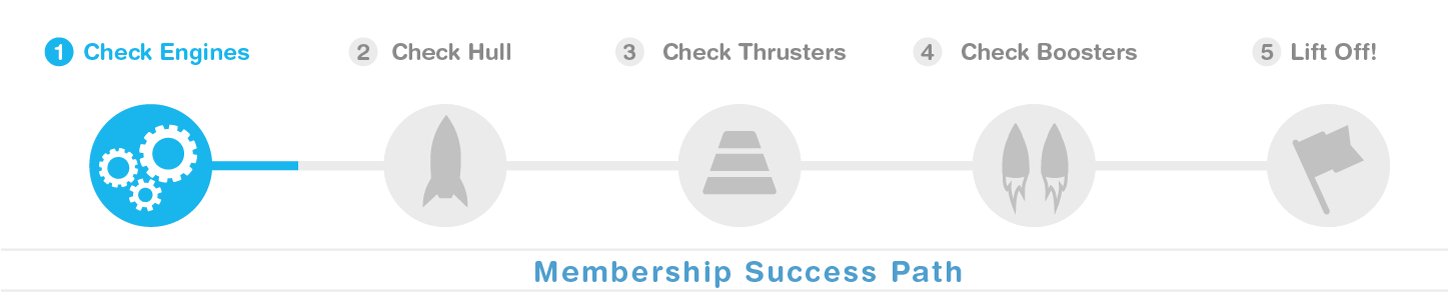
Success Path Planning and Journey Mapping 20:10
Josh introduces the concept of success path planning and journey mapping, using a UX design approach to create a motivational learning experience.
He explains the stages of a learner's journey, from awareness to success, and the characteristics associated with each stage.
Josh discusses the importance of using the right verbs to describe success milestones and outcomes, aligning them with the learner's progress.
He provides an example of mapping course outcomes to specific milestones and action steps, ensuring a clear path for learners to achieve their goals.
Bloom's Taxonomy and Hierarchy of Learning 46:58
Josh introduces Bloom's Taxonomy as a framework for designing learning outcomes, outlining the different levels of learning from knowledge to evaluation.
He explains the importance of using specific verbs at each level to describe the types of learning activities and outcomes.
Josh provides a cheat sheet for Bloom's Taxonomy, listing verbs for each level to help in writing outcome statements.
He emphasizes the need to build a foundation of knowledge and comprehension before moving to higher-order thinking skills like analysis and evaluation.
Creating Course Outcomes and Mapping to Lessons 1:07:43
Josh demonstrates the process of creating course-level outcomes using Bloom's Taxonomy, starting with knowledge and moving to evaluation.
He provides examples of course outcomes and maps them to specific lessons and activities, ensuring alignment with the overall learning goals.
Josh discusses the importance of using the right verbs to describe what learners will be able to do, making the outcomes actionable and measurable.
He emphasizes the need to continuously refer back to the course outcomes to ensure that all lessons and activities support the desired learning objectives.
Curriculum Planning Matrix and Assessment Mapping 1:33:43
Josh introduces the curriculum planning matrix, a tool for mapping course outcomes to specific lessons and assessments.
He explains the structure of the matrix, including metadata, time tracking, and assessment mapping, to create a cohesive and purposeful learning experience.
Josh demonstrates how to map weekly outcomes to specific lessons and activities, ensuring that each lesson supports a clear learning objective.
He emphasizes the importance of aligning lessons with course outcomes and using the matrix to track progress and measure success.
Detailed Curriculum Planning Example 1:33:58
Josh provides a detailed example of a curriculum plan for a social media and digital marketing class, demonstrating the complete planning process.
He explains the metadata, time tracking, and assessment mapping for the class, including the total hours required and the distribution of activities.
Josh highlights the importance of aligning lessons with course outcomes and using the curriculum planning matrix to ensure a cohesive and purposeful learning experience.
He emphasizes the need to continuously review and refine the curriculum to ensure it meets the learning goals and supports the success of the learners.
Final Steps and Tools for Curriculum Planning 1:35:42
Josh summarizes the key steps in the curriculum planning process, including brainstorming phases, mapping outcomes, and creating detailed lesson plans.
He emphasizes the importance of using the right verbs and aligning lessons with course outcomes to create a motivational and engaging learning experience.
Josh provides tools and resources, including templates and cheat sheets, to help in the curriculum planning process.
He encourages continuous review and refinement of the curriculum to ensure it meets the learning goals and supports the success of the learners.
Creating a Curriculum Plan End to End 1:35:58
Josh Lomelino introduces the concept of a built-in scheduling tool for planning and deadlines.
Discussion on the use of rubrics for assessment, especially in public-facing courses.
Josh explains the assignment sheet and its role in outlining the entire assessment process.
High-level goals and outcomes are outlined, emphasizing the end-to-end planning process.
Project Scenario and Assignment Steps 1:42:58
Josh emphasizes starting with a project scenario and providing examples and rationale.
The assignment steps are flexible, ranging from 16 weeks to as short as five weeks.
Each assignment is broken down into specific steps with submission information and a rubric.
The rubric includes categories like business overview, customer avatars, competitive research, and a process book.
Grading and Accreditation Preparation 1:45:07
Josh discusses the importance of grading and rubrics for accreditation purposes.
The process involves pre-planning grading points and distinct grading categories.
External documentation is used before executing the plan within an LMS.
The document is not completed in one pass but unfolds week by week.
Success Path and Competency Development 1:47:18
Josh outlines the success path from initial unhappiness to transformation.
Focus on teaching students to develop the necessary competencies.
Thinking creatively and getting away from the computer helps in the ideation process.
Josh plans to use audio recordings to capture free-forming thoughts and ideas.
Leveraging AI for Content Creation 1:50:39
Josh explains the use of AI tools like Otter AI to transcribe audio recordings.
The transcript helps generate learning outcomes and lesson plans from the speaker's own words.
The process involves recording thoughts in sequence and combining them into a single file.
The final output provides a structured outline for content creation.
Finalizing the Curriculum Plan 2:08:57
Josh emphasizes the importance of having a clear success path with five to six phases.
The final output includes a detailed transcript and summary of ideas.
The process helps in creating targeted content that aligns with the success path.
The final matrix serves as a knowledge base for querying and generating new ideas.
Implementing the Plan 2:12:18
Josh discusses the importance of mapping ideas to specific phases of the success path.
The process involves querying the knowledge base for lesson ideas and action items.
The final matrix includes practical tips and techniques for developing a healthy lifestyle.
The approach ensures that the curriculum is actionable and moves learners towards their goals.
Refining the Content 2:15:00
Josh plans to refine the content by focusing on specific lessons and their details.
Each lesson is dedicated to a single audio recording and subsequent transcription.
The process helps in generating detailed video scripts and lesson plans.
The final output includes a clear structure for the entire course experience.
Creating a Knowledge Base 2:22:41
Josh emphasizes the importance of creating a knowledge base for future reference.
The knowledge base includes all key steps, tools, and resources used in the process.
The approach ensures that the final curriculum is comprehensive and actionable.
The knowledge base serves as a resource for continuous improvement and content creation.
Final Thoughts and Encouragement 2:23:38
Josh encourages participants to query their own brains and use AI tools for brainstorming.
The process helps in generating a variety of assets and content ideas.
The final matrix includes a detailed outline for the entire course experience.
The approach ensures that the curriculum is designed to help learners achieve their goals and become raving fans.
Here are strategies you can use to create engaging and motivational learning experiences for students.
Here are some key strategies Josh Lomelino discussed for creating engaging and motivational learning experiences: